
Astronomy
Why do people look into space with telescopes but not binoculars?

“Why do people use telescopes to look into space but not binoculars?” — Niraj, age 6, Arlington, Massachusetts Go outside right now. What’s the farthest thing you can see? A tree? A bird? What about the Moon? It’s 250,000 miles away. The Sun is 400 times farther than that, at nearly 100 million miles (but …
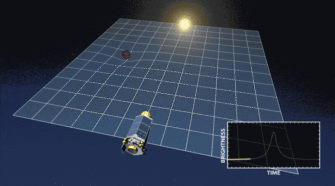
NASA’s Roman Space Telescope will use gravity as a magnifying glass to find exoplanets

NASA’s Nancy Grace Roman Space Telescope launched on Aug. 30, 2026, beginning a journey that will take it about a million miles from the Earth. Once there, Roman will study some of the biggest mysteries in astronomy, from dark energy to the formation of galaxies. It will also search for planets around other stars, called …
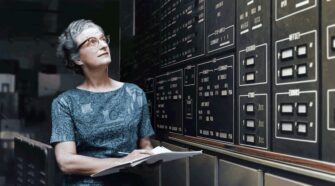
Nancy Grace Roman’s legacy lives on in NASA’s newest space telescope

The Nancy Grace Roman Space Telescope successfully launched August 30, 2026 aboard a SpaceX Falcon Heavy rocket from the Kennedy Space Centre in Florida. When it becomes operational early next year, it will transform our view of the universe. With a mirror the same size as the one in the Hubble Space Telescope but a …
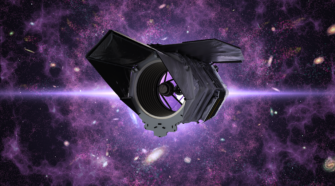
NASA is gearing up to launch its next flagship space telescope

NASA plans to soon launch a new space telescope that will survey a billion galaxies to trace how the universe evolved over time, all courtesy of America’s spy program and decades of research into detector technology. The telescope, known as the Nancy Grace Roman Space Telescope, was first developed by the National Reconnaissance Office, before …
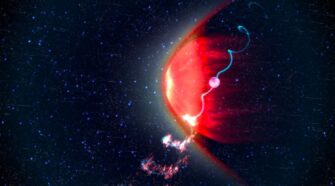
Twinkling star reveals the secrets of plasma structures in our cosmic neighbourhood

With the most powerful radio telescope in the southern hemisphere, we have observed a twinkling star and discovered an abundance of mysterious plasma structures in our cosmic neighbourhood. The plasma structures we see are variations in density or turbulence, akin to interstellar cyclones stirred up by energetic events in the galaxy. The study, earlier this …
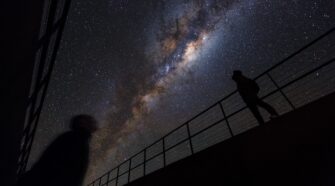
When you wish upon a star, is it already dead?

Deep in the Chilean Desert, astronomers witness a skyscape like few others on Earth. Credit: ESO/Luis Calçada/Herbert Zodet When you wish upon a star, Jiminy Cricket told us, your dreams come true. But according to an idea doing the rounds on social media, that may not be the case: According to astronomy, when you wish …
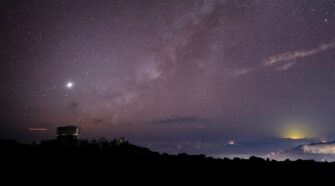
Another puzzling interstellar object spotted whizzing through solar system

Astronomers manning an asteroid warning system caught a glimpse of a large, bright object zipping through the solar system late on July 1, 2025. The object’s potentially interstellar origins excited scientists across the globe, and the next morning, the European Space Agency confirmed that this object, first named A11pl3Z and then designated 3I/ATLAS, is the …
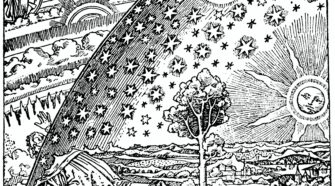
Early visions of Mars: 19th-century astronomer used science fiction to imagine the Red Planet

Living in today’s age of ambitious robotic exploration of Mars, with an eventual human mission to the red planet likely to happen one day, it is hard to imagine a time when Mars was a mysterious and unreachable world. And yet, before the invention of the rocket, astronomers who wanted to explore Mars beyond what …
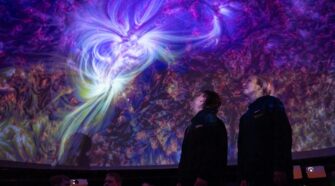
Brief history of how we brought the stars indoors to planetariums

Picture this: a small audience is quietly ushered into a darkened room. They gasp in awe, as a brilliant night sky shines above. They wonder – as many after them will do – what trickery has made the roof above their heads disappear? But this is a performance; the stars above an ingenious projection. For …
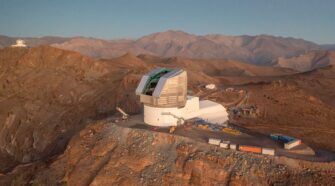
Rubin Observatory assembling the most complete time-lapse record of the universe

On 23 June 2025, the world will get a look at the first images from one of the most powerful telescopes ever built: the Vera C. Rubin Observatory. Perched high in the Chilean Andes, the observatory will take hundreds of images of the southern hemisphere sky, every night for 10 years. In doing so, it …