
Moon
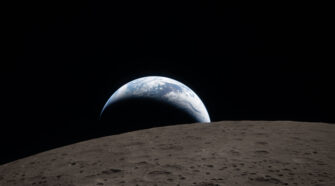
Artemis II moonshot reflects a spacefaring vision of Jules Verne’s 1865 novel

With the launch of NASA’s Artemis II mission on April 1, 2026, human beings have finally returned to the Moon for the first time in 50 years – since the age of Apollo. When Apollo 11 first landed on the lunar surface, the astronauts portrayed their accomplishment as the realization of a science fictional dream. …
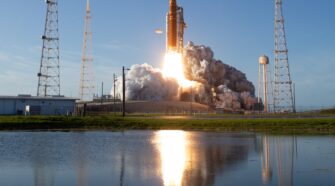
Witnessing lift off of first humans to venture to the Moon since 1972

Even from a distance of several kilometres, the Artemis II rocket looked huge. Then, there was a moment that felt like an eternity, as around 2,600 metric tons of spacecraft lifted off. I was honoured to receive an invitation from the Canadian Space Agency to attend this historic launch at NASA’s Kennedy Space Center. I …
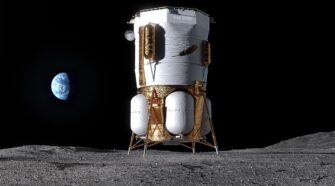
2026 is poised to be an exciting year for space exploration

In 2026, astronauts will travel around the Moon for the first time since the Apollo era, powerful new space telescopes will prepare to survey billions of galaxies, and multiple nations will launch missions aimed at finding habitable worlds, water on the Moon and clues to how our solar system formed. Together, these launches will mark …
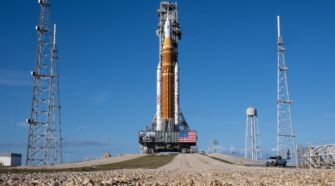
Artemis II sending a crew around the Moon to lay groundwork for a future landing

Almost as tall as a football field, NASA’s Space Launch System rocket and capsule stack traveled slowly – just under 1 mile per hour – out to the Artemis II launchpad, its temporary home at the Kennedy Space Center in Florida, on Jan. 17, 2026. That slow crawl is in stark contrast to the peak …
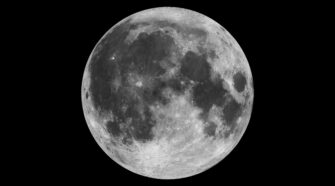
How can there be ice on the Moon?

“I have a question about ice on the Moon. How is this possible?” — Olaf, age 9, Hillsborough, North Carolina We’re lucky to live on a water world. More than 70% of the Earth’s surface is covered in water. Earth is about 94 million miles from the Sun. That’s within the Goldilocks zone: the place …
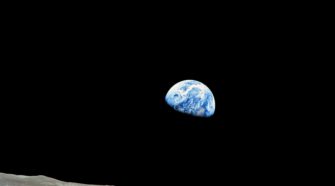
Is the Moon drifting away from the Earth?

“Is the Moon getting farther away from the Earth?” — Judah, age 9, Broken Arrow, Oklahoma The Moon is moving 1½ inches (3.8 centimeters) farther away from the Earth every year. Scientists measure the distance to the Moon by bouncing lasers off mirrors placed there by space probes and astronauts. By measuring the amount of …
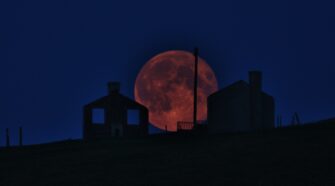
Why does the Moon look close some nights and far away on others?

“Why does the Moon look close some nights and far away on other nights?” —Gabriel H., age 7, Providence, Rhode Island Some nights the Moon seems really close and bigger than usual. One summer evening when I was a child, I remember being mystified and then startled at a huge round shape slowly creeping up …
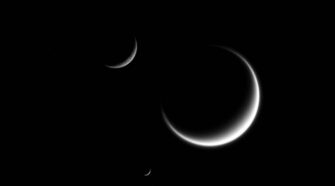
Why do some planets have moons and others don’t?

“Why do some planets have moons and some don’t?” — Siddharth, age 6, Texas On Earth, you can look up at night and see the Moon shining bright from hundreds of thousands of miles away. But if you went to Venus, that wouldn’t be the case. Not every planet has a moon – so why …
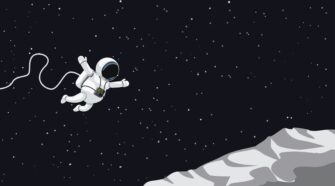
How high could I jump on the Moon?

“How high could I jump on the Moon?” — Miles, age 5, London, United Kingdom If you were lucky enough to go to the Moon, you’d be able to jump six times as high there as you can here on Earth. Try it: jump up and imagine you’re on the Moon. Six times further up …
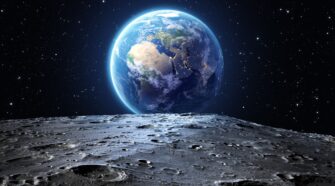
Our moon has been drifting away from Earth for 2.5 billion years

Looking up at the moon in the night sky, you would never imagine that it is slowly moving away from Earth. But we know otherwise. In 1969, NASA’s Apollo missions installed reflective panels on the moon. These have shown that the moon is currently moving 3.8 cm away from the Earth every year. If we …