
Astronomy
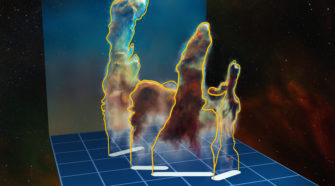
A new look in 3D at the Pillars of Creation

New study suggests that iconic structures more aptly named the Pillars of Destruction The original Hubble Space Telescope image of the famous Pillars of Creation was taken two decades ago and immediately became one of its most famous and evocative pictures. Since then, these billowing clouds, which extend over a few light-years, have awed scientists and the public …
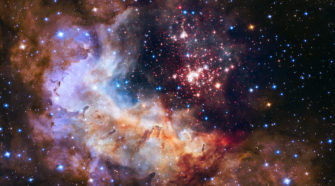
Celestial fireworks mark Hubble’s 25th

The brilliant tapestry of young stars flaring to life resemble a glittering fireworks display in the 25th anniversary Hubble Space Telescope image, released to commemorate a quarter century of exploring the solar system and beyond. “Hubble has completely transformed our view of the universe, revealing the true beauty and richness of the cosmos” said John …
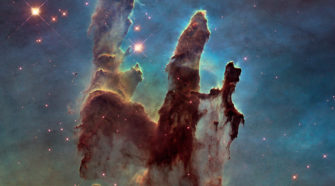
Hubble’s Top 100 images
During its 25 years of peering out at the farthest depths of the Universe, the Hubble Space Telescope has enabled humanity to witness countless amazing sites from here on Earth. Here we present the Hubble Top 100 list. It has been compiled, and is regularly reviewed, by staff of ESA/Hubble. A couple of quick notes …
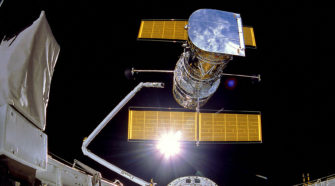
Hubble Space Telescope: Showing humanity the Universe for 25 years

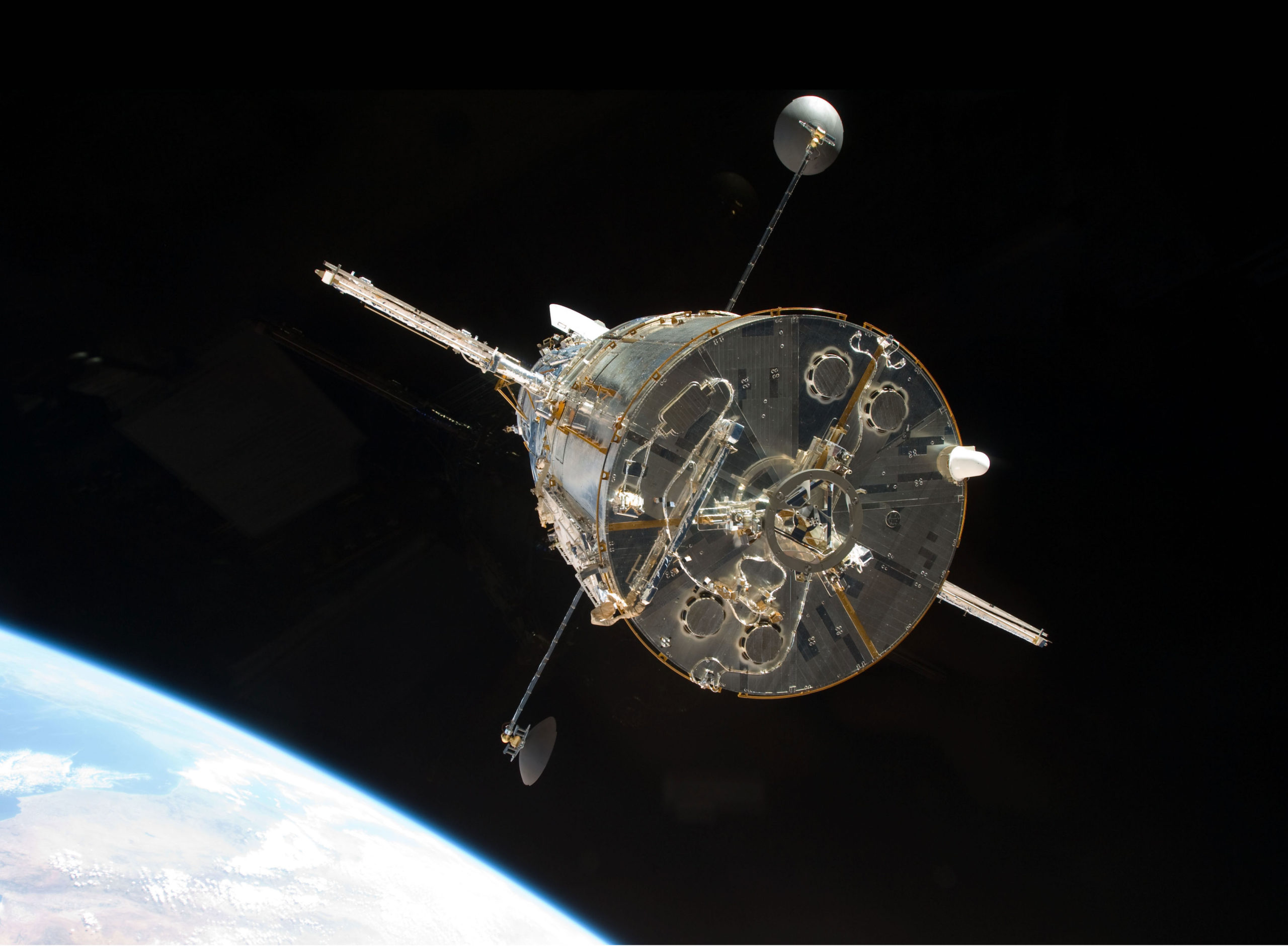
Since launching in 1990, the Hubble Space Telescope (HST) has awed and inspired the public with a dazzling array of images. More than just pretty pictures, Hubble has collected 25 years of data, providing unprecedented views and insights into the universe. By observing objects from neighboring planets to the most distant galaxies, Hubble has captured …
Hubble, bubble, toil and trouble

Vocabulary • Focal Length: The distance between a curved mirror and its Focal Point • Focal Point: The position where all reflected light inside the telescope focuses to a point of light • Focal Surface: The place where the Focal Point converges to • Primary Mirror: The larger of the two curved mirrors that reflect …
Astronomical serendipity
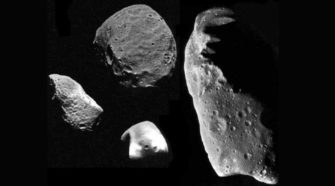
Since 1594, when Johannes Kepler predicted that there should be a planet between Mars and Jupiter, astronomers had been searching for that “missing planet.” When Giuseppe Piazzi discovered Ceres in 1801, the scientific world thought that he had ended the search. Then Ceres disappeared from sight, only to be recovered one year later. Astronomers breathed …
Cassiopeia: The Queen

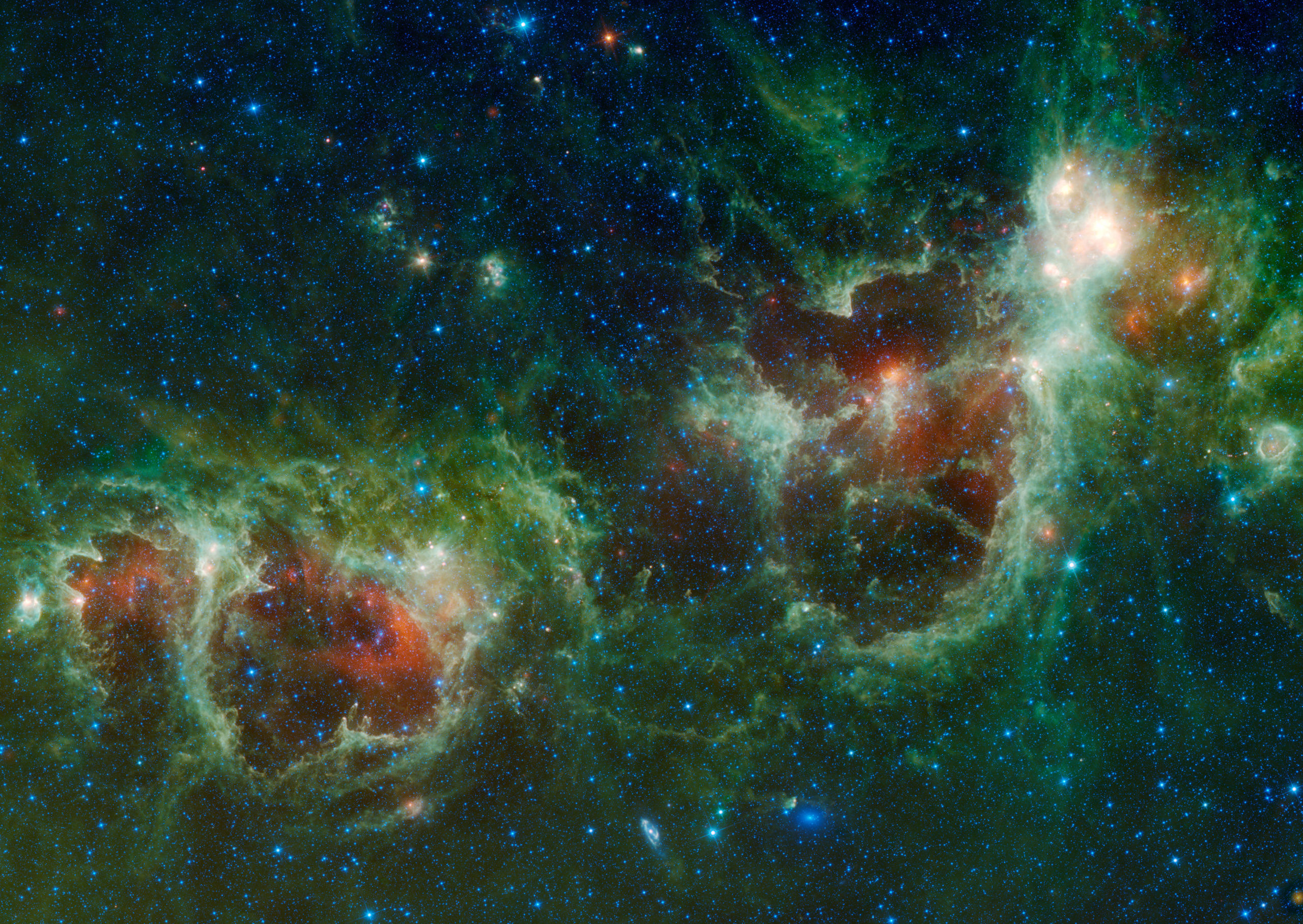
Cassiopeia is a prominent constellation in the northern hemisphere which is very easily recognised as a W or M in the night skies. In most of Continental America and all of Europe it is visible year round but becomes most spectacular in the winter months, when it is elevated to a much higher altitude. Along …
M16: The Eagle Nebula
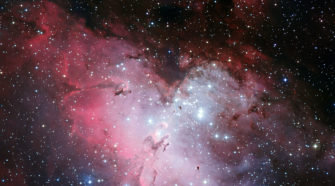
The Eagle Nebula is located in the constellation Serpens and is one of the most iconic star forming regions in our galaxy. The nebula is also known as Messier 16 or M16 in the catalog of celestial nebulas and star clusters compiled by French Astronomer Charles Messier. This is probably one of the most famous …
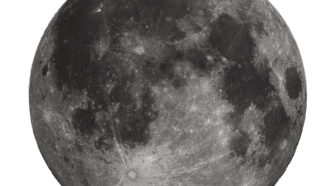
All about the Earth’s moon
As this issue commemorates 45 years since the first human placed foot on the Moon it seems rather fitting to feature the Moon in this astronomy item. As we all know the Moon is our nearest astronomical body at about a quarter of a million miles or 405,000 Km away. Unlike other planets in our …
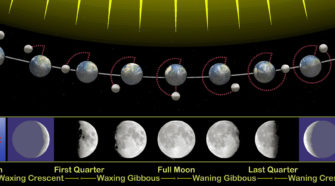
Moon phases: Past, present and future

Take a look tonight at the Moon. What lunar phase do you observe? If you and your students want to learn more about the lunar phases before studying the night sky, we recommend: http://bit.ly/RShiwaay. Observing the Moon night after night and either photographing the phase or drawing it, is a good way to understand the …