
Solar System
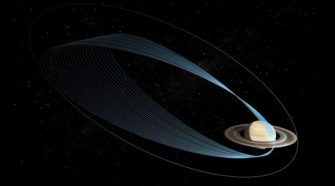
Join in the Cassini Name Game

As NASA’s Cassini mission approaches its 10th anniversary at Saturn, its team members back here on Earth are already looking ahead to an upcoming phase. Starting in late 2016, the Cassini spacecraft will repeatedly climb high above Saturn’s north pole, flying just outside its narrow F ring. Cassini will probe the water-rich plume of the …
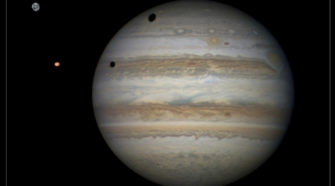
Jupiter: The Gas Giant

Of all the planets that orbit around our Sun there are two that are easily visible and are fascinating objects to view. These are, of course, Saturn and Jupiter. Of these Jupiter is prominent in our night skies at the moment. At magnitude -2.06 it is the third brightest thing in the sky after the …

Stephen Colbert presents honor from NASA to Voyager scientist
As if NASA’s Voyager mission didn’t have enough firsts in its 36-year journey, what with sending the first spacecraft to Uranus, Neptune and, most recently, interstellar space! Now, it has another first back here on Earth: on the December 3, 2013 episode of the Colbert Report, host Stephen Colbert floated across the stage in a …
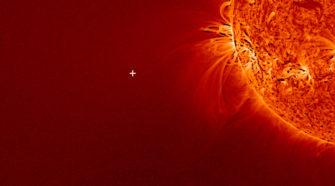
Comets are unpredictable beasts
The media was full of talk of comets with the inaugural visit of Comet ISON C/2012 S1. It was pre-hyped as being “The Comet of the Century”, being visible in daylight etc, etc. The reality of the matter is that comets are strange beasts and are rarely predictable unless they have been round a few …
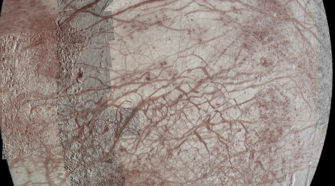
Europa likely off-kilter at one time
By analyzing the distinctive cracks lining the icy face of Europa, NASA scientists found evidence that this moon of Jupiter likely spun around a tilted axis at some point. Europa’s tilt could influence calculations of how much of the moon’s history is recorded in its frozen shell, how much heat is generated by tides in …
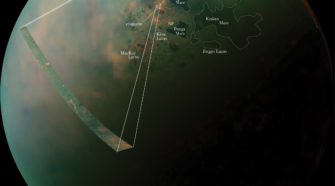
Titan’s northern lakes resemble Earth’s salt flats
With the sun now shining down over the north pole of Saturn’s moon Titan, a little luck with the weather, and trajectories that put the spacecraft into optimal viewing positions, NASA’s Cassini spacecraft has obtained new pictures of the liquid methane and ethane seas and lakes that reside near Titan’s north pole. The images reveal …
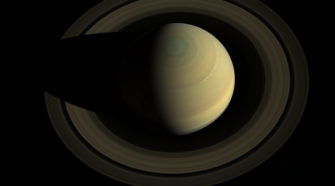
Cassini swings high above Saturn to take a portrait
It’s a view as good as gold. A loop high above Saturn by NASA’s Cassini spacecraft revealed this stately view of the golden-hued planet and its main rings. The observation and resulting image mosaic were planned as one of three images for Cassini’s 2013 Scientist for a Day essay contest. The contest challenges students to …
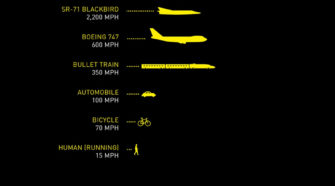
How fast can Juno go?
When arriving at Jupiter, the planet’s gravity pulls in Juno faster and faster until the spacecraft reaches a speed of over 250,000 kilometers per hour (150,000 miles per hour) with respect to Earth – making it one of the fastest human-made objects ever. When it arrives at Jupiter, it slams on the brakes, firing its main engine in …
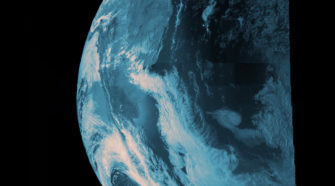
Juno’s flyby portrait of Earth

This false color composite shows more than half of Earth’s disk over the coast of Argentina, South America and the South Atlantic Ocean as NASA’s Juno probe slingshotted by on Oct. 9, 2013 for a gravity assisted acceleration to Jupiter. The mosaic was assembled from raw images taken by the Junocam imager. Juno will arrive …
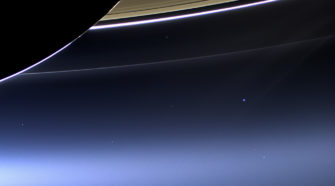
Cassini images Earth beneath Saturn’s rings
NASA’s Cassini spacecraft captured color images of Earth and the moon from its perch in the Saturn system nearly 900 million miles (1.5 billion kilometers) away on July 19. Meanwhile, MESSENGER, the first probe to orbit Mercury, took a black-and-white image from a distance of 61 million miles (98 million kilometers) as part of a …