
Solar System
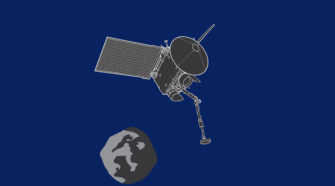
OSIRIS-REx is bringing home a piece of an asteroid

Upon first hearing the name OSIRIS-REx, a picture of an unknown carnivorous dinosaur may come to mind. But OSIRIS-REx (Origins-Spectral Interpretation-Resource Identification-Security-Regolith Explorer) is actually an acronym that names an upcoming asteroid exploration mission. The spacecraft will travel to an asteroid target in a near-Earth orbit, perform scientific experiments, and become the first U.S. mission that …
Juno is unlocking Jupiter’s secrets

A spacecraft named Juno hopes to unlock more secrets about the largest planet in our solar system, Jupiter, by studying the planet from its core all the way out to its large magnetic field. The mission’s objective is to help us better understand the origins of our solar system by studying how Jupiter formed. Jupiter is …
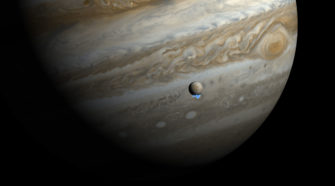
The Jovian system

The Jovian system encompasses Jupiter, its rings and moons. Jupiter was reputedly discovered by the Babylonians approximately 2,800 years ago. Its moons were discovered by Galileo, in 1610, observed through a refracting telescope. The planet Jupiter Jupiter is the fifth planet in our Solar System counting out from the Sun, with an average orbital distance …

Myth, mystery and measurement onboard Juno

After traveling for five years, three Lego minfigs from Earth reached the planet Jupiter this summer. Traveling onboard a spacecraft named Juno, these are the first Lego minifigs to visit the largest planet in our solar system. Specially made from aluminum, they are designed be able to withstand the volatile conditions for 37 planned orbits …
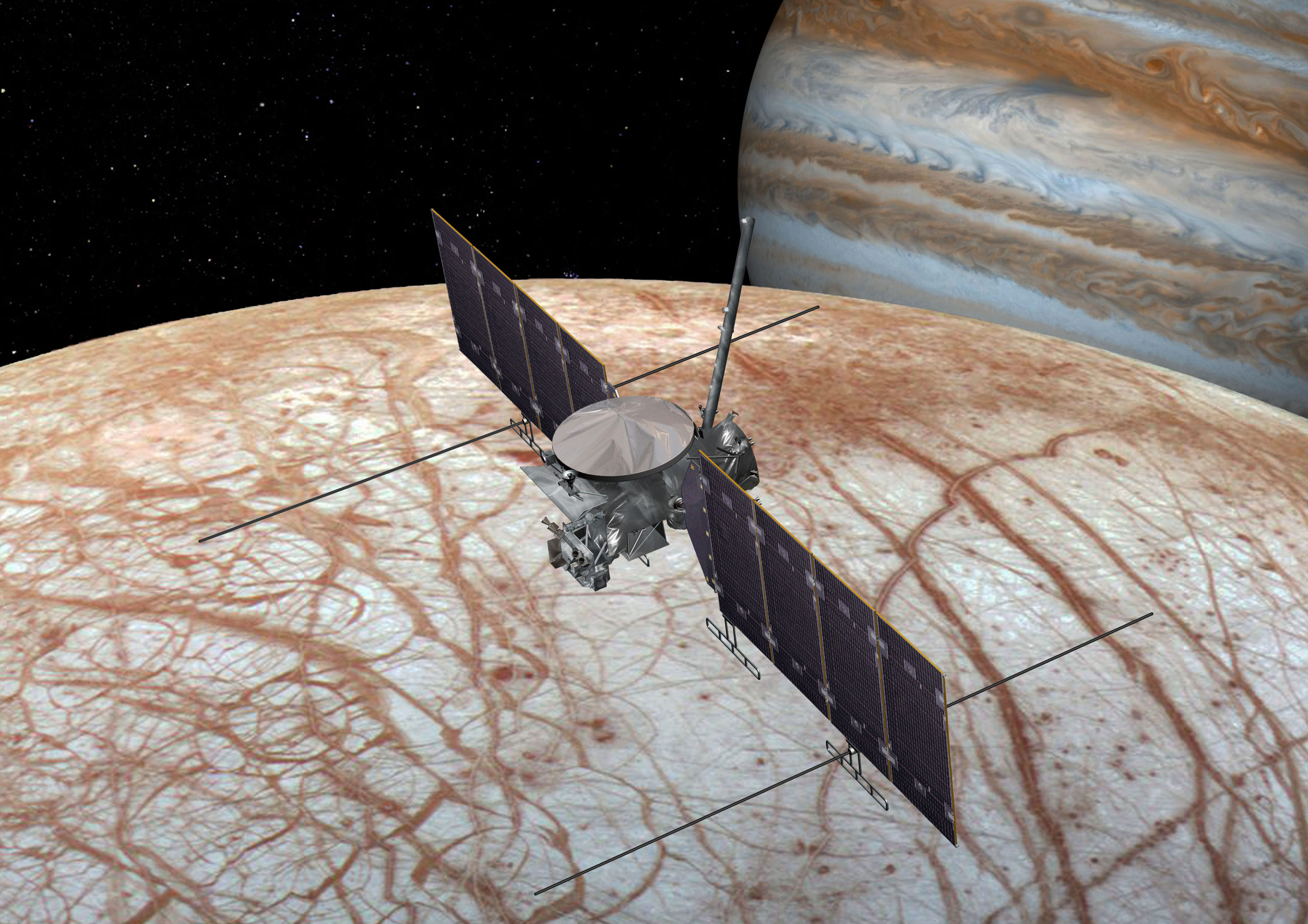
Life on a moon? Exploring Europa
On a clear night, you can see the planet Jupiter with nothing more than your eyes, as it shines steady and bright against the background of glittering stars. If you take a closer look through a telescope, you can see tiny specks surrounding it. What if I told you that there may be life on …
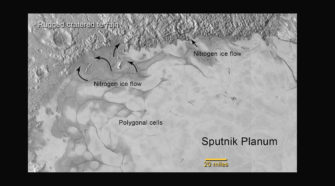
Flowing ice and atmospheric haze discovered on Pluto

Flowing ice and a surprising extended haze are among the newest discoveries from NASA’s New Horizons mission, which reveal distant Pluto to be an icy world of wonders. “We knew that a mission to Pluto would bring some surprises, and now — 10 days after closest approach — we can say that our expectation has …
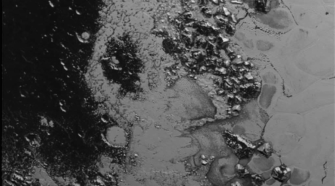
New Horizons unveils Pluto and its moons

After traveling more than three billion miles during a nine-and-a-half year journey, the New Horizons spacecraft has made a successful investigative flyby of Pluto. With the achievement, the United States via NASA has become the first country to send a spacecraft to all nine of the classical planets of our solar system. Yes, we said nine, not …
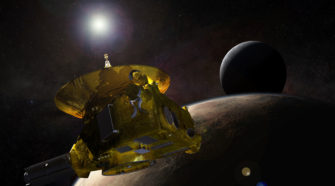
New Horizons: Pluto garners the spotlight

Nine years ago, in 2006, NASA launched the New Horizons spacecraft to the outer reaches of the Solar System in order to study the Pluto system. New Horizons is the fastest spacecraft ever launched, and has traveled more than three billion miles to reach its primary target: Pluto. The flyby of the Pluto system on …
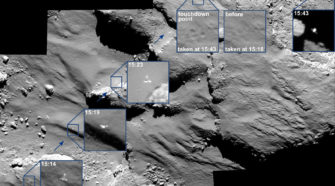
Philae bounces into history books
The European Space Agency (ESA) led Rosetta mission, made history this past year, and, captured the attention of people around the world as it became the first to orbit and land on a comet. The spacecraft achieved its goal after deploying a washing machine-sized lander onto the surface of Comet 67P/Churyumov-Gerasimenko on Nov. 12. The …
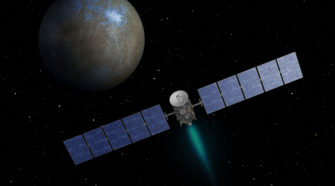
Exploring the Dawn of the solar system

As we celebrate the tenth anniversary of Huygens’ descent to the surface of Saturn’s giant satellite Titan, humanity’s first landing on an outer solar system moon, and the continuing success of its parent craft Cassini, we look forward to an extraordinary year of robotic solar system exploration in 2015, and one which should bring new …