
Education
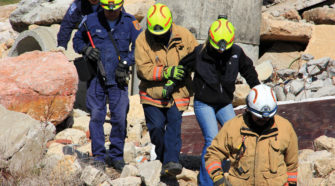
FINDER keepers: Technology developed for outer space is saving lives on Earth

The Department of Homeland Security and NASA’s Jet Propulsion Laboratory have developed a new radar-based technology dubbed “Finding Individuals for Disaster and Emergency Response” (FINDER), to aid in detecting victims buried in rubble. FINDER is based on the technology NASA’s Deep Space Network uses to monitor the movements and location of its spacecraft millions of miles …
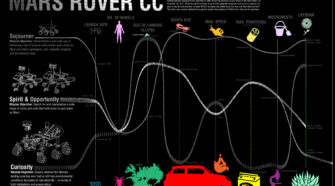
Mars Rover Infographic

Starting with the Sojourner rover, launched in 1996, NASA has sent four robotic rovers to the Red Planet. On November 26, 2011, NASA launched Curiosity, its most technologically advanced rover ever. At a glance, it’s easy to see the size evolution between NASA’s youngest and oldest rover, but how else have they evolved? This chart …
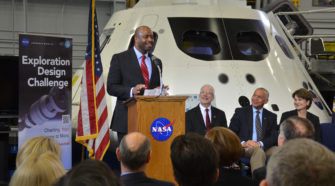
Contest challenges students to design new radiation shield

NASA is challenging school-children to protect their future ride into space. The agency’s Exploration Design Challenge (EDC), announced March 11 during an event at the Johnson Space Center in Houston, engages U.S. students in kindergarten through high school in helping to solve the known problem of increased radiation exposure encountered on flights into deep space. …
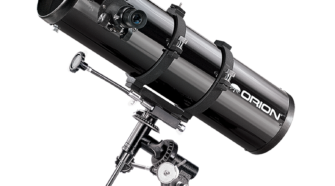
Starting in astronomy: Buying your first telescope

A telescope is a spectacular scientific instrument that is accessible to people of all means and abilities and opens up the wonders of the Universe. Like all things technical it is a tool and you will only be able to use it with the correct training. Also, typically, there are a number of different types …
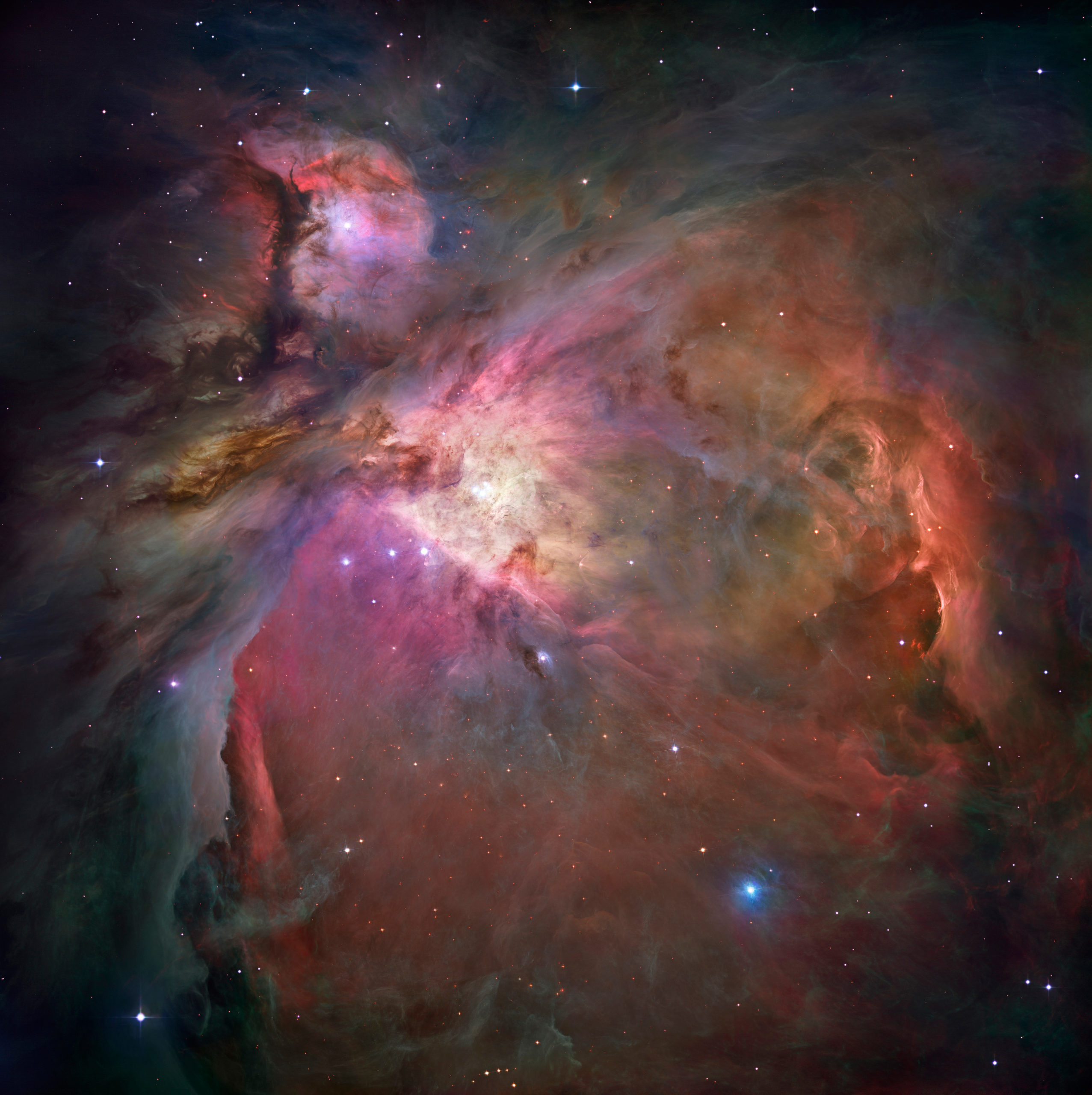
Orion The Hunter
The constellation Orion is an easily recognisable star grouping visible in the northern hemisphere in even the most light polluted skies. Orion is depicted in amy ways: as a hunter wielding a club and shield, brandishing a sword and shield, or clubbing a lion. These however are just visualisations interpreting a pattern in the stars. …
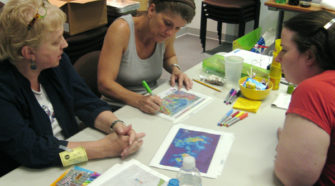
Teach Briefs • April 2013
Student to attend, share experience of Soyuz launch Abby Harrison recently received an invitation almost as rare as winning the Powerball lottery. ESA Astronaut Luca Parmitano has invited her as his guest to attend the Russian Soyuz-TMA-09M Launch to the ISS on May 28. Harrison has long been a fan of space exploration and STEM …
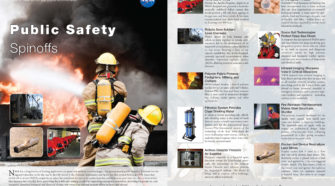
NASA Spinoffs for Public Safety
NASA has a long history of finding applications of space and aeronautical technologies that provide broad public benefits. The basis for the Agency’s direction to do this can be directly traced to the National Aeronautics and Space Act that created NASA in 1958. Since that initial call to action, NASA’s emphasis on safety has translated …
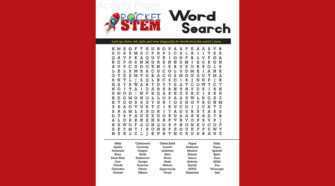
Word Search • Skylab Issue

Do your best to find these words scattered throughout this issue of RocketSTEM magazine.
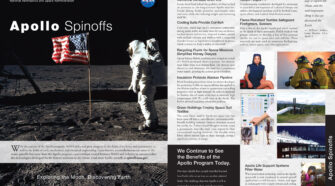
NASA Spinoffs from Apollo
With the success of the Apollo program, NASA delivered great progress in the fields of rocketry and aeronautics, as well as the fields of civil, mechanical, and electrical engineering. Lesser known accomplishments are some of the many spinoffs that came from the Apollo program—partnerships created between NASA and industry to commercialize the technologies developed for …
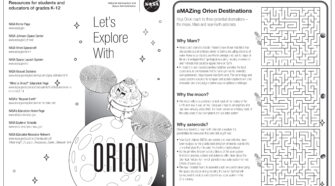
Let’s explore with Orion activity pages

Four pages of activities and information from NASA exploring the upcoming role of Orion and the Space Launch System (SLS) in manned space exploration beyond low Earth orbit (LEO). These pages are available from NASA and geared toward students and educators of grades K-12. This article appeared in the 1st issue of RocketSTEM magazine. …