
Human Spaceflight
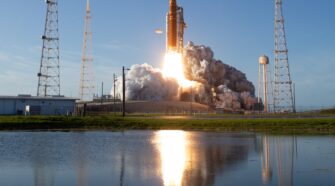
Witnessing lift off of first humans to venture to the Moon since 1972

Even from a distance of several kilometres, the Artemis II rocket looked huge. Then, there was a moment that felt like an eternity, as around 2,600 metric tons of spacecraft lifted off. I was honoured to receive an invitation from the Canadian Space Agency to attend this historic launch at NASA’s Kennedy Space Center. I …

Meet the Crew of Artemis II

Meet the four astronauts who will venture on a 10-day mission around the Moon on Artemis II, the first crewed flight aboard NASA’s human deep space capabilities, paving the way for future lunar surface missions. Artemis II is NASA’s first mission with crew aboard our foundational deep space rocket, the Space Launch System, and Orion …
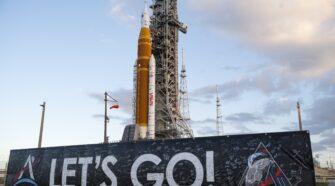
The long road to launch of the Artemis II mission

NASA is once again shooting for the Moon, for the first time since the 1970s. As soon as April 1, 2026, NASA will launch its Artemis II mission, using the Space Launch System heavy lift rocket to send a crewed spacecraft, called Orion, into orbit. From there, the crew will circle around the Moon over …
Artemis II Fun Activities
NASA has released a number of activities for children and teenagers ahead of the Artemis II launch to send humans back around the Moon for the first time since 1972. We’ve scoured the space agency’s websites and compiled a number of those activities here, ranging from paper models, drawing guides, children’s books, colorings sheets and …

NASA announces major changes to Artemis lunar mission plans

NASA Artemis News Conference video streamed live on Feb 27, 2026 from Kennedy Space Center Press Site in Florida. Credit: Ken Kremer At a news conference at the Kennedy Space Center press site held on February 27, 2026, NASA Administrator Jared Isaacman announced sweeping changes to Project Artemis – increasing the flight cadence for the …
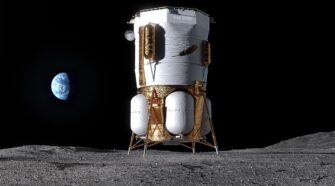
2026 is poised to be an exciting year for space exploration

In 2026, astronauts will travel around the Moon for the first time since the Apollo era, powerful new space telescopes will prepare to survey billions of galaxies, and multiple nations will launch missions aimed at finding habitable worlds, water on the Moon and clues to how our solar system formed. Together, these launches will mark …
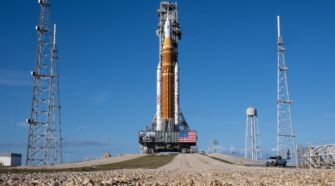
Artemis II sending a crew around the Moon to lay groundwork for a future landing

Almost as tall as a football field, NASA’s Space Launch System rocket and capsule stack traveled slowly – just under 1 mile per hour – out to the Artemis II launchpad, its temporary home at the Kennedy Space Center in Florida, on Jan. 17, 2026. That slow crawl is in stark contrast to the peak …
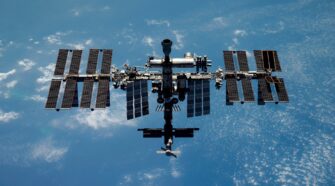
Water recycling is key for ISS and Mars missions

When you’re on a camping trip, you might have to pack your own food and maybe something to filter or treat water that you find. But imagine your campsite is in space, where there’s no water, and packing jugs of water would take up room when every inch of cargo space counts. That’s a key …
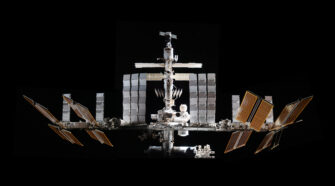
How does the International Space Station stay in low Earth orbit?

“How is the International Space Station able to orbit without burning up?” — Mateo, age 8, New York, New York Flying through Earth’s orbit are thousands of satellites and two operational space stations, including the International Space Station, which weighs as much as 77 elephants. The International Space Station, or ISS, hosts scientists and researchers …
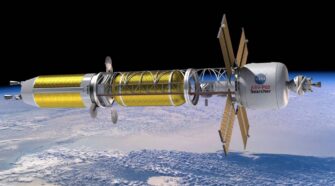
Nuclear rockets are twice as fast – but designing them isn’t easy

NASA plans to send crewed missions to Mars over the next decade – but the 140 million-mile (225 million-kilometer) journey to the red planet could take several months to years round trip. This relatively long transit time is a result of the use of traditional chemical rocket fuel. An alternative technology to the chemically propelled …