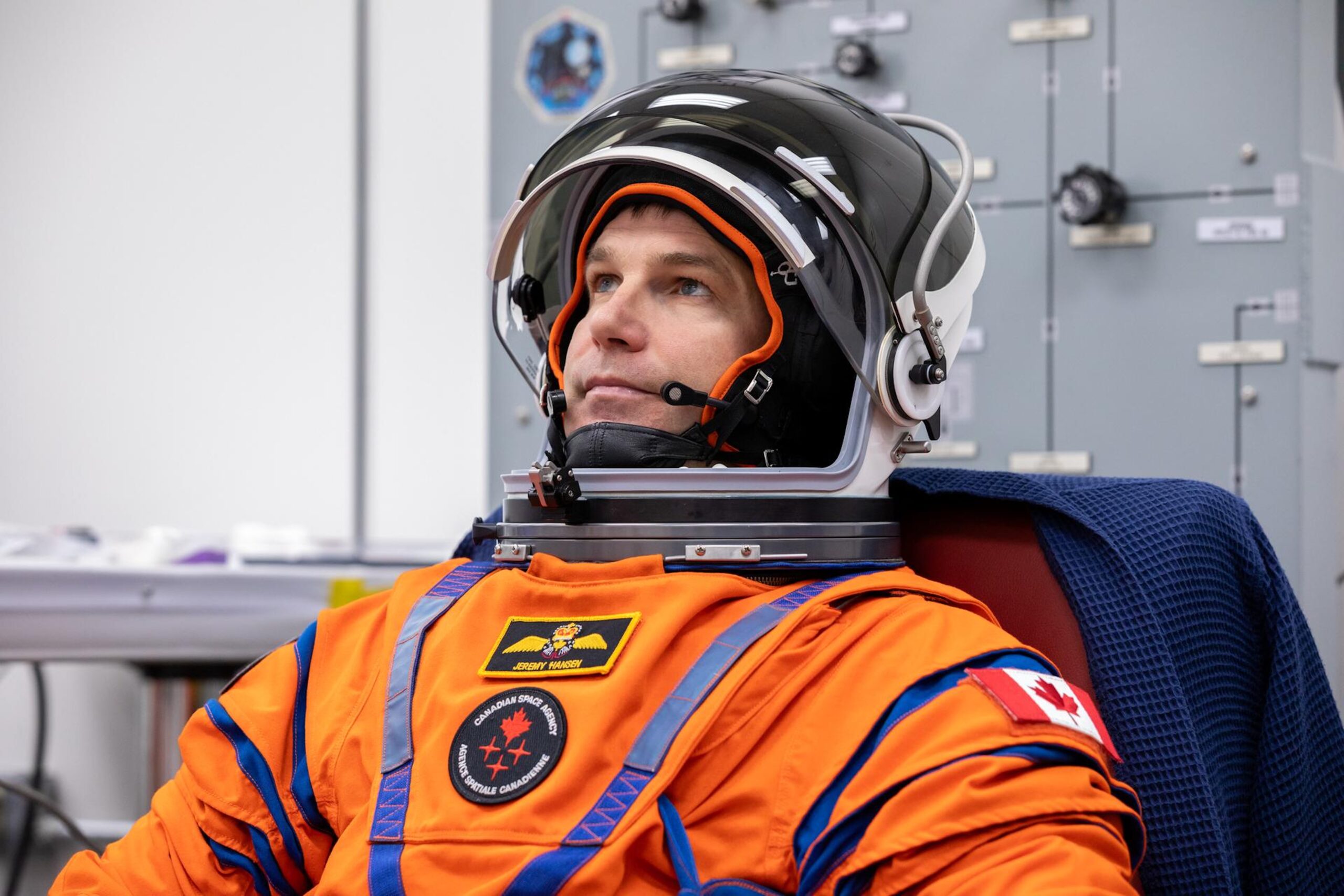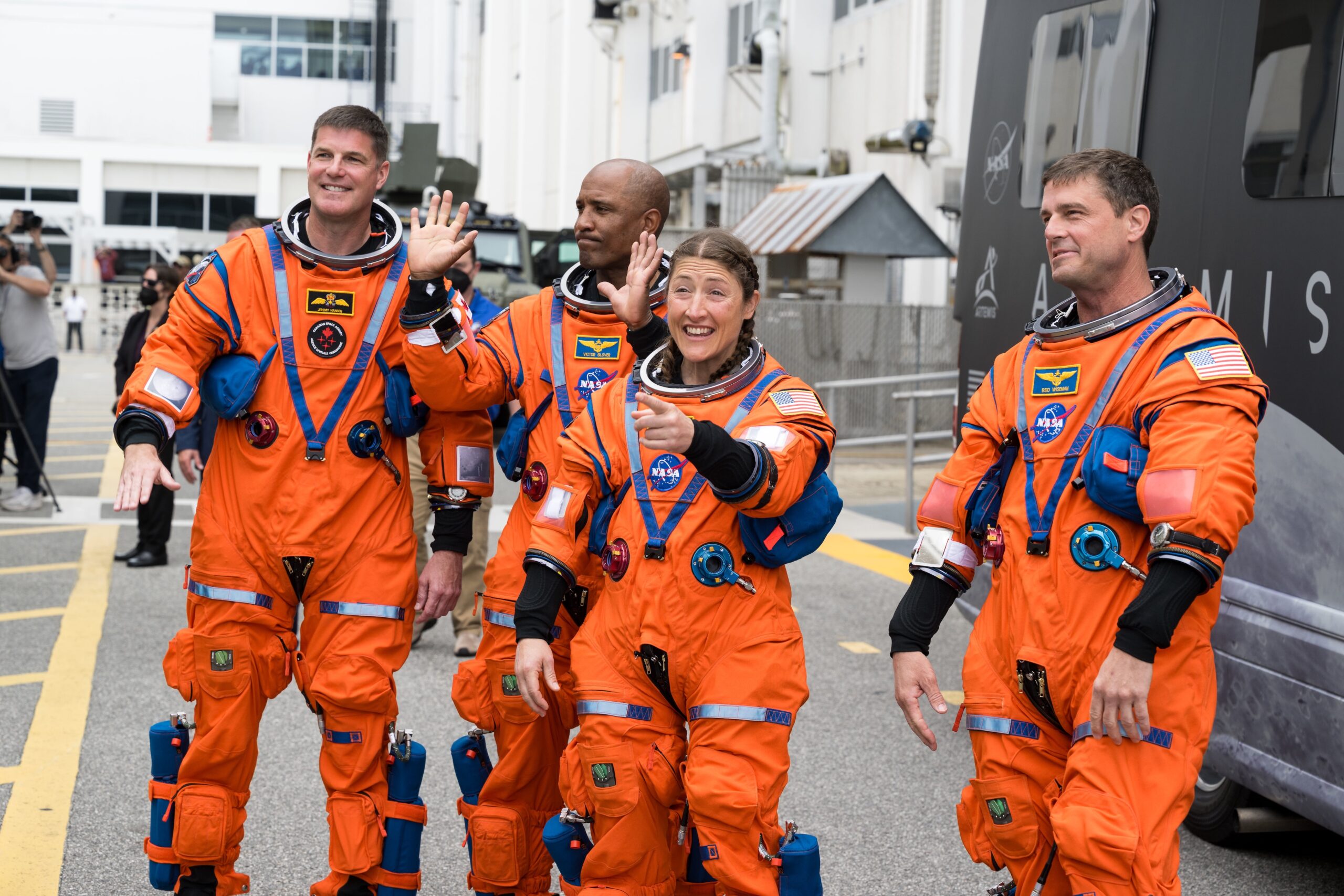
Meet the four astronauts who will venture on a 10-day mission around the Moon on Artemis II, the first crewed flight aboard NASA’s human deep space capabilities, paving the way for future lunar surface missions.
Artemis II is NASA’s first mission with crew aboard our foundational deep space rocket, the Space Launch System, and Orion spacecraft and will confirm all the spacecraft’s systems operate as designed with crew aboard in the actual environment of deep space. The mission will pave the way to way for lunar surface missions, establishing long-term lunar science and exploration capabilities, and inspire the next generation of explorers — The Artemis Generation.
The crew of four astronauts will lift off on the approximately 10-day mission from Launch Complex 39B at NASA’s Kennedy Space Center in Florida, blazing beyond Earth’s grasp atop the agency’s mega Moon rocket. Over the course of about two days, they will check out Orion’s systems and perform a targeting demonstration test relatively close to Earth before then beginning the trek toward the Moon.
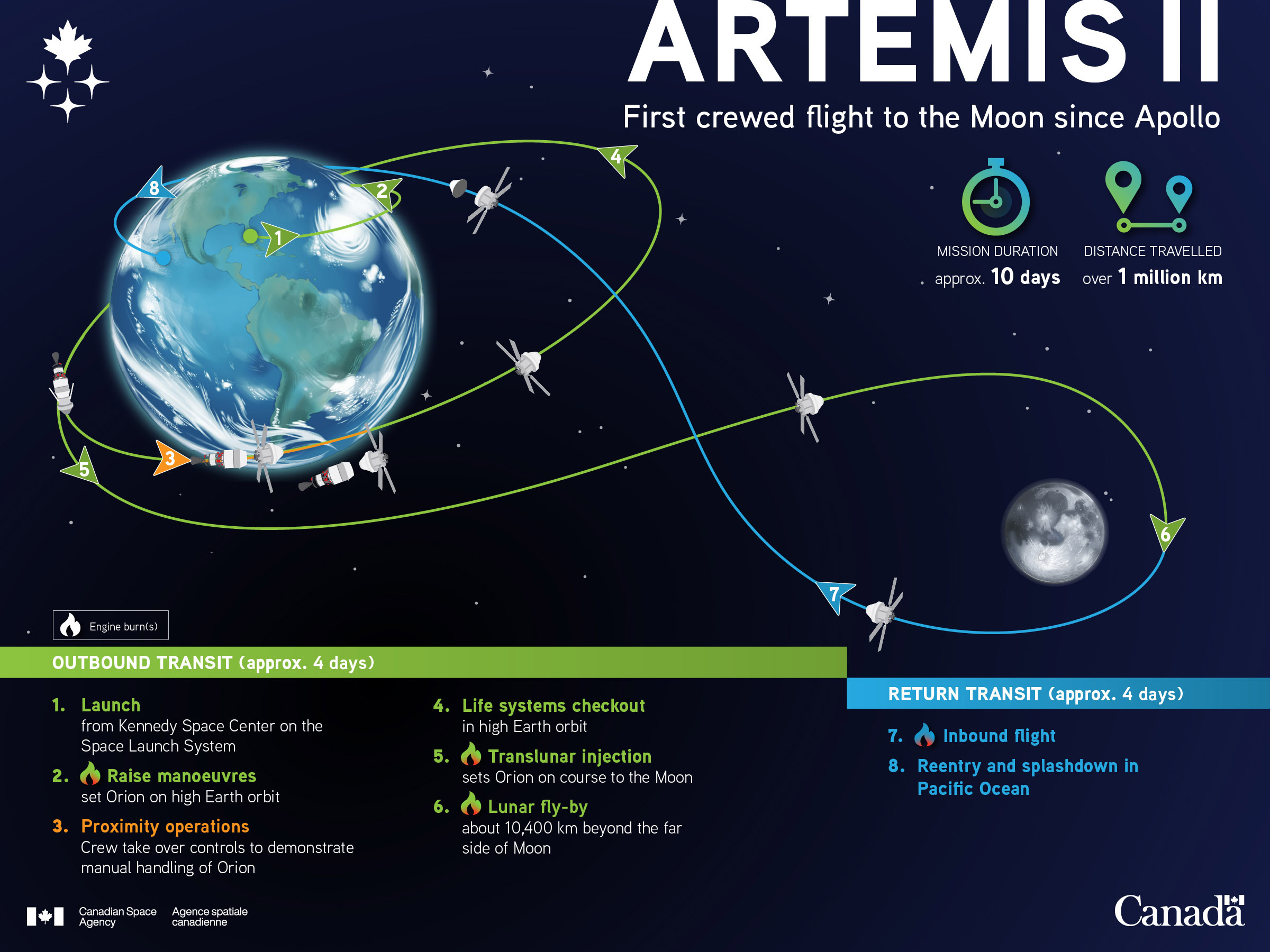
Orion’s European-built service module will give the spacecraft the big push needed to break free from Earth orbit and set course for the Moon. This trans-lunar injection burn will send the astronauts on an outbound trip of about four days, taking them around the far side of the Moon, where they will ultimately create a figure eight extending more than 230,000 miles from Earth. At their max distance, the crew will fly about 6,400 miles beyond the Moon. During the approximate four-day return trip, the astronauts will continue to evaluate the spacecraft’s systems.
Instead of requiring propulsion on the return, this fuel-efficient trajectory harnesses the Earth-Moon gravity field, ensuring that—after its trip around the far side of the Moon—Orion will be pulled back naturally by Earth’s gravity for the free return portion of the mission.
The crew will endure the high-speed, high-temperature reentry through Earth’s atmosphere before splashing down in the Pacific Ocean off the coast of San Diego, where they will be met by a recovery team of NASA and Department of Defense personnel who will bring them back to shore.
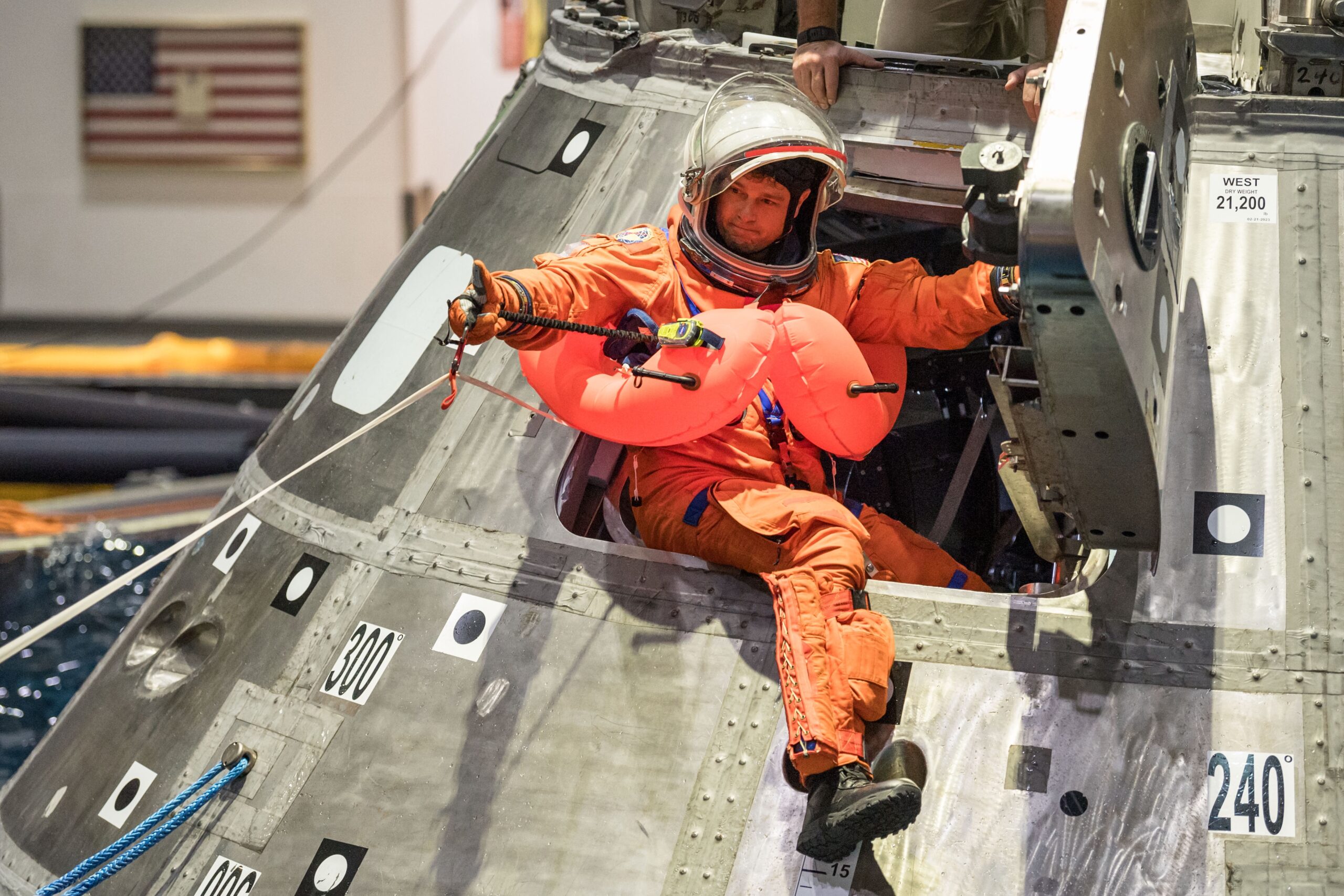
Reid Wiseman, Commander
Reid Wiseman is a 27-year Navy veteran, a pilot, a father, an engineer, and a Baltimore native. He was selected as an astronaut by NASA in 2009 and served as Flight Engineer aboard the International Space Station for Expedition 41 from May through November of 2014. During the 165-day mission, Reid and his crewmates completed over 300 scientific experiments in areas such as human physiology, medicine, physical science, Earth science and astrophysics. This was Reid’s first spaceflight, which also included almost 13 hours as lead spacewalker during two trips outside the orbital complex. Reid also fostered a strong social media presence throughout his mission by sharing the raw emotions of spaceflight as seen through the eyes of a rookie flier. He earned a Bachelor of Science degree from Rensselaer Polytechnic Institute in Troy, New York, and a Master of Science in Systems Engineering from the Johns Hopkins University in Baltimore. He served as Chief of the Astronaut Office. Wiseman has been assigned as Commander of NASA’s Artemis II mission.
Personal
Reid’s hometown is Baltimore, Maryland. His late wife, Carroll, dedicated her life to helping others as a newborn intensive care unit Registered Nurse. She is survived by their two children. Despite a long list of professional accolades, Reid considers his time as an only parent as his greatest challenge and the most rewarding phase of his life. When faced with a challenge in his personal or professional life, Reid often seeks guidance from books by experts in the subject, and maintains a growth mindset towards learning and collaborative solutions. His father, Bill, resides in Hunt Valley, Maryland.
Education
Graduated from Dulaney High School, Timonium, Maryland, 1993; Bachelor of Science degree in Computer and Systems Engineering, Rensselaer Polytechnic Institute, Troy, New York, 1997; Master of Science degree in Systems Engineering, Johns Hopkins University, Baltimore, Maryland, 2006; Certificate of Space Systems, US Naval Postgraduate School, Monterey, California, 2008.
Experience
Reid was commissioned through the Reserve Officers’ Training Corps (ROTC) following graduation from Rensselaer Polytechnic Institute in 1997 and reported to Pensacola, Florida, for flight training. He was designated as a Naval Aviator in 1999 and reported to Fighter Squadron 101, Naval Air Station Oceana, Virginia, for transition to the F‑14 Tomcat. Following his initial training, Reid was assigned to Fighter Squadron 31, also at Oceana, and made two deployments to the Middle East, supporting Operations Southern Watch, Enduring Freedom and Iraqi Freedom. During his second deployment in 2003, he was selected to attend the U.S. Naval Test Pilot School, Class 125. Following graduation in June 2004, Reid was assigned as a Test Pilot and Project Officer at Air Test and Evaluation Squadron Two Three (VX-23) at Naval Air Station Patuxent River, Maryland. At VX-23, Reid earned his Master’s degree and worked various flight test programs involving the F-35 Lightning II, F-18 weapons separation, Ship Suitability and the T-45 Goshawk. Following his tour at Patuxent River, Reid reported to Carrier Air Wing Seventeen as the Strike Operations Officer, where he completed a deployment around South America. From there, he was assigned to Strike Fighter Squadron 103, Naval Air Station Oceana, Virginia, flying the FA-18F Super Hornet. He was at sea when he was selected for astronaut training.
NASA Experience
Reid was selected in June 2009 as one of 9 members of the 20th NASA astronaut class. Reid reported to the Johnson Space Center in August 2009 and completed astronaut training in May 2011. He served as Flight Engineer aboard the International Space Station for Expedition 41. He served as chief of the astronaut office from 2020 through 2022. Wiseman has been assigned as Commander of NASA’s Artemis II mission.
Spaceflight Experience
Expedition 40/41 (May 29 through November 9, 2014). On May 29, 2014, Reid launched from the Baikonur Cosmodrome in Kazakhstan to the International Space Station along with two of his best friends, Soyuz Commander Maxim Suraev of the Russian Federal Space Agency (Roscosmos) and Flight Engineer Alexander Gerst of the European Space Agency. Upon reaching the station, they joined NASA astronaut and Commander Steven Swanson, cosmonauts Alexander Skvortsov, and Oleg Artemyev of Roscosmos. The three crew members of Expedition 41 returned to earth on Sunday, November 9, 2014, in Arkalyk, Kazakhstan after a 165-day mission that included hundreds of scientific experiments and two spacewalks. They set a milestone for station science by completing a record 82 hours of research in a single week in July, 2014.
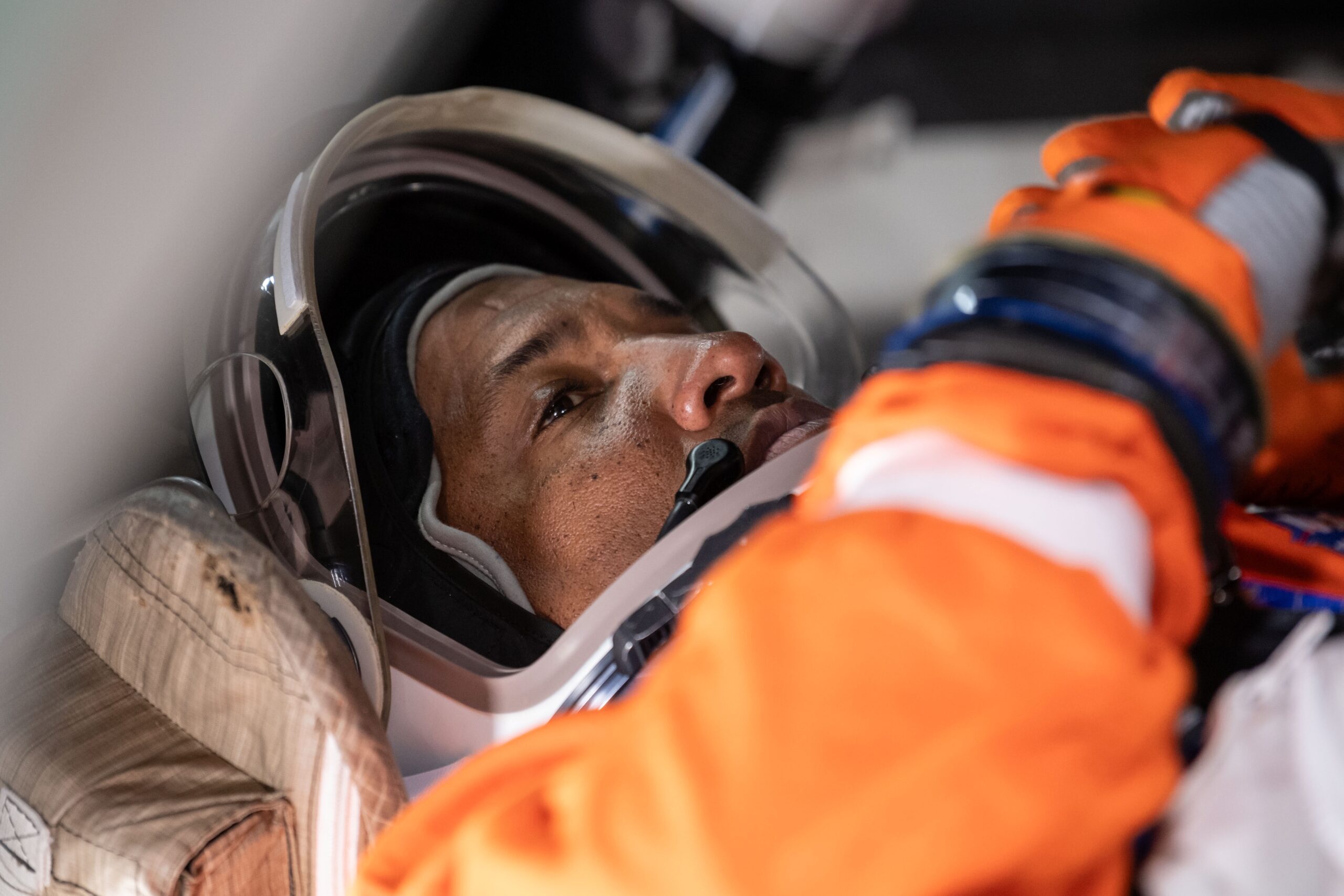
Victor J. Glover, Jr., Pilot
Victor J. Glover, Jr. was selected as an astronaut in 2013 while serving as a Legislative Fellow in the United States Senate. He most recently served as pilot of the Crew-1 dragon spacecraft, named Resilience, which flew to the International Space Station, where he also served as Flight Engineer for Expedition 64/65. Glover has been assigned as Pilot of NASA’s Artemis II mission around the Moon.
The California native earned an undergraduate engineering degree as a two sport athlete, while serving his community. Glover is a Naval Aviator and was a test pilot in the F/A‐18 Hornet, Super Hornet and EA‐18G Growler. He and his family have been stationed in many locations in the United States and Japan and he has deployed in combat and peacetime.
Personal
Born in Pomona, California. Married to the former Dionna Odom of Berkeley, California. They have four children. His mother lives in southern California, and his father and stepmother live in Prosper, Texas.
Education
Graduated from Ontario High School, Ontario, California, 1994. Bachelor of Science in General Engineering, California Polytechnic State University, San Luis Obispo, California, 1999. Master of Science in Flight Test Engineering (USAF TPS), Air University, Edwards Air Force Base, California, 2007. Master of Science in Systems Engineering (PD‐21), Naval Postgraduate School, 2009. Master of Military Operational Art and Science, Air University, Montgomery, Alabama, 2010.
Experience
Following commissioning, Glover began preflight training in Pensacola, Florida, and completed his advanced flight training in Kingsville, Texas, earning his wings of gold on December 14, 2001. In 2002, Glover reported to the Marine Fleet Replacement Squadron, VMFAT‐101, in Miramar, California. In 2003, after completing the F/A‐18C syllabus, he was assigned to the Blue Blasters of Strike Fighter Squadron VFA‐34 in Oceana, Virginia. With the Blue Blasters, he completed the final deployment of the USS John F. Kennedy (CV‐67) in support of Operation Iraqi Freedom. While deployed, he completed a Space Systems Certificate from the Naval Postgraduate School (NPS). Glover was then selected as the United States Navy’s exchange pilot to attend the Air Force Test Pilot School. During the one‐year experimental test piloting course, he flew more than 30 aircraft in the U.S. and Italy. On June 9, 2007, he was designated a test pilot. Glover then served as a test pilot with the Dust Devils of Air Test and Evaluation Squadron VX‐31 in China Lake, California, testing various weapons systems on the F/A ‐ 18 Hornet, Super Hornet and EA‐18G Growler. In his off‐duty hours, he earned a Master of Science degree in Systems Engineering via NPS in Monterey, California. In 2009, Glover received orders to the Air Command and Staff College at Maxwell Air Force Base, Alabama. Following graduation, Glover reported to the Dambusters of Strike Fighter Squadron VFA‐195, in Atsugi, Japan, where he served as a Department Head. With the Dambusters, he deployed three times to various locations in the Pacific Ocean. In 2012, Glover was selected for the Legislative Fellowship. He reported to the Office of Legislative Affairs in Washington, D.C., and was assigned to the office of a U.S. Senator. While in Washington D.C., he completed a Certificate in Legislative Studies at Georgetown University. Glover was a Legislative Fellow in the U.S. Senate when selected as an astronaut candidate.
Glover accumulated 3,500 flight hours in more than 40 aircraft, over 400 carrier arrested landings and 24 combat missions.
NASA Experience
Glover was selected in 2013 as one of eight members of the 21st NASA astronaut class. After completing Astronaut Candidate Training in 2015, he served as a space station capsule communicator (CapCom), Expedition 52 Increment Lead Crewmember, Operations Officer, and Family Escort for several Soyuz and Crew Dragon launches – one of the most challenging and rewarding jobs of an astronaut.
In 2018, Glover was assigned to his first spaceflight mission, as Crew-1 Pilot, the first post-certification mission of SpaceX’s Crew Dragon spacecraft – the second crewed flight for that vehicle – and as an Expedition 64/65 Flight Engineer aboard the International Space Station. Glover spent 168 days (Nov. 16, 2020 to May 2, 2021) in space, completing 4 spacewalks, and several scientific, maintenance, and outreach activities.
Post-flight, Glover served as the Human Landing Systems crew representative, and in a supervisory role as the Astronaut Office, Assigned Crew Branch Chief.
In 2023, Glover was assigned as Artemis II Pilot. He will be one of four astronauts on the first mission to the Moon in more than 50 years on NASA’s path to establishing a long-term presence for science and exploration. The approximately 10-day flight will test NASA’s foundational human deep space exploration capabilities, the SLS rocket, Exploration Ground Systems, and the Orion spacecraft.
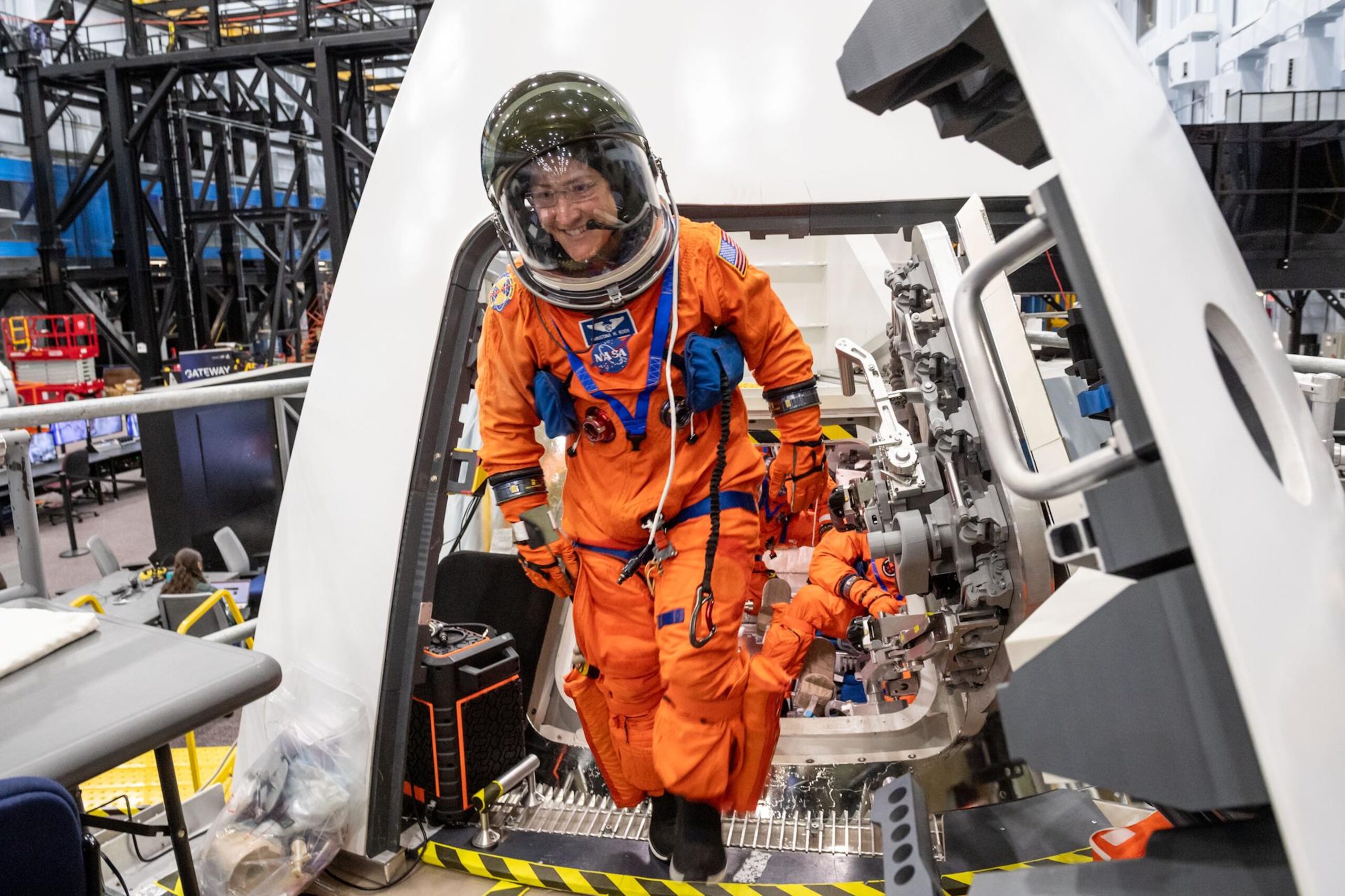
Christina Koch, Mission Specialist
Christina Koch is an explorer and engineer who became astronaut in 2013. She is currently training for NASA’s Artemis II mission, planned to go around the moon next year. Her previous experience in spaceflight was living and working on the International Space Station for almost all of 2019 in Expeditions 59, 60, and 61. For this mission, she flew on the Russian Soyuz rocket and trained extensively in Russia. Christina spent a total of 328 consecutive days in space and participated in the first all-female spacewalks. After this spaceflight and before being assigned to Artemis II, she served as Branch Chief of the Assigned Crew Branch in the Astronaut Office and did a rotation as Assistant for Technical Integration for the Center Director at NASA’s Johnson Space Center. Prior to becoming an astronaut, Christina’s experience spanned both space science mission instrument development and remote scientific field engineering in the Antarctic and Arctic. Her hobbies include surfing, rock and ice climbing, programming, community service, triathalons, yoga, backpacking, woodworking, photography and travel.
Summary
Christina Hammock Koch [pronunciation: “Cook”] was selected as a NASA astronaut in 2013. She served as flight engineer on the International Space Station (ISS) for Expedition 59, 60 and 61. Koch set a record for the longest single spaceflight by a woman with a total of 328 days in space and participated in the first all-female spacewalk. She has been assigned as Mission Specialist I of NASA’s Artemis II mission.
Personal
Koch is a native of Grand Rapids, Michigan, grew up in Jacksonville, North Carolina and resided in Livingston, Montana when she was selected to join the Astronaut Corps. Growing up spending summers on her family’s farm in Michigan, she was instilled with a passion for hard work and challenges. Her hobbies include surfing, rock climbing, community service, running, yoga, backpacking, photography and travel.
Education
Koch attended North Carolina State University in Raleigh, North Carolina, where she earned Bachelor of Science degrees in electrical engineering and physics and a Master of Science degree in electrical engineering and studied abroad at the University of Ghana. She attended high school at the North Carolina School of Science and Math in Durham, North Carolina and White Oak High School in Jacksonville, North Carolina. She later received an Honorary PhD from North Carolina State University.
Experience
Koch’s experience prior to becoming an Astronaut spanned both space science instrument development and remote scientific field engineering. Her career began as an Electrical Engineer at NASA Goddard Space Flight Center (GSFC) where she contributed to instruments on several NASA space science missions. Koch then became a Research Associate in the United States Antarctic Program which included a yearlong stay with a winter-over at the Admunsen-Scott South Pole Station and season at Palmer Station. While in this role, she served as a member of the Firefighting and Search and Rescue Teams. Koch then returned to space science instrument development as an Electrical Engineer at the Johns Hopkins University Applied Physics Laboratory’s Space Department, where she contributed to instruments on missions including Juno and the Van Allen Probes. Koch then returned to remote scientific field work with tours at Palmer Station in Antarctica and Summit Station in Greenland. Next, joining the National Oceanic and Atmospheric Administration, she continued work at remote scientific bases, serving as a Field Engineer in Utqiagvik, Alaska and as Station Chief of the American Samoa Observatory. Throughout her career, she has done technical instructing, volunteer tutoring and educational outreach.
NASA Experience
Koch participated in the NASA Academy program in 2001 and worked as an Electrical Engineer at GSFC early in her career. She was selected in 2013 as one of eight members of the 21st NASA astronaut class and completed Astronaut Candidate training in 2015. In 2018, she was assigned to her first space flight, a long duration mission on the ISS. After her spaceflight, Koch served as Branch Chief of the Assigned Crew Branch in the Astronaut Office. She then went on a rotation as Assistant for Technical Integration for the Center Director at NASA’s Johnson Space Center. Koch is currently training for NASA’s Artemis II mission.
Space Flight Experience
Koch launched on March 14, 2019 from the Baikonur Cosmodrome on the Soyuz MS-12 spacecraft with Roscosmos Cosmonaut Alexey Ovchinin and NASA Astronaut Nick Hague. She returned to Earth on February 6, 2020 on the MS-13 Soyuz spacecraft with Roscosmos Cosmonaut Alexander Skvortsov and European Space Agency (ESA) Astronaut Luca Parmitano. Serving as a Flight Engineer on the ISS for Expeditions 59, 60 and 61, she and her crewmates contributed to hundreds of experiments in many kinds of science and technology development. Some of the scientific highlights from her missions include doing robotics for upgrades to the Alpha Magnetic Spectrometer, growing protein crystals for pharmaceutical research, and testing 3D biological printers in microgravity. Koch conducted six spacewalks, including the first three all women spacewalks, totaling 42 hours and 15 minutes. She has spent a total of 328 days in space.