NASA has released a number of activities for children and teenagers ahead of the Artemis II launch to send humans back around the Moon for the first time since 1972. We’ve scoured the space agency’s websites and compiled a number of those activities here, ranging from paper models, drawing guides, children’s books, colorings sheets and more. Let’s Go Artemis!
Orion paper model & SLS rocket
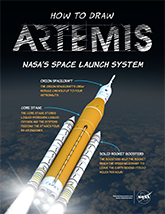
The Orion spacecraft will serve as our nation’s next-generation exploration vehicle. It will take humans farther than they’ve ever travelled before — including missions to Mars. Orion includes both crew and service modules, a spacecraft connector, and a launch abort system to ensure the safety of the crew. Orion launches atop the Space Launch System (SLS) rocket, which is comprised of a large center core powered by engines adapted from the Space Shuttle program, and a pair of Solid Rocket Boosters (SRBs).
Download, print and build a paper model of the Orion spacecraft.
Download, print and build a paper model of the entire SLS rocket.
Download instructions to build your own SLS bottle rocket.
How to draw Artemis series
NASA shows how you can learn to draw a fleet of sophisticated space hardware that will take us on Artemis Missions – similar to the way NASA engineers and technicians sketched out early concepts for space suits, rockets, spaceships, ground systems, and orbiting platforms that have allowed us to explore other worlds.
Orion spacecraft
Orion is the vehicle that will take astronauts on Artemis missions. It’s the only spacecraft capable of human deep space flight and high-speed reentry from the vicinity of the Moon and Mars. More than just a crew module, Orion has a launch abort system to keep astronauts safe during an emergency launch, and a service module which is the powerhouse that fuels and propels Orion, and keeps astronauts alive with water, oxygen, power and temperature control.
Space Launch System (SLS) rocket
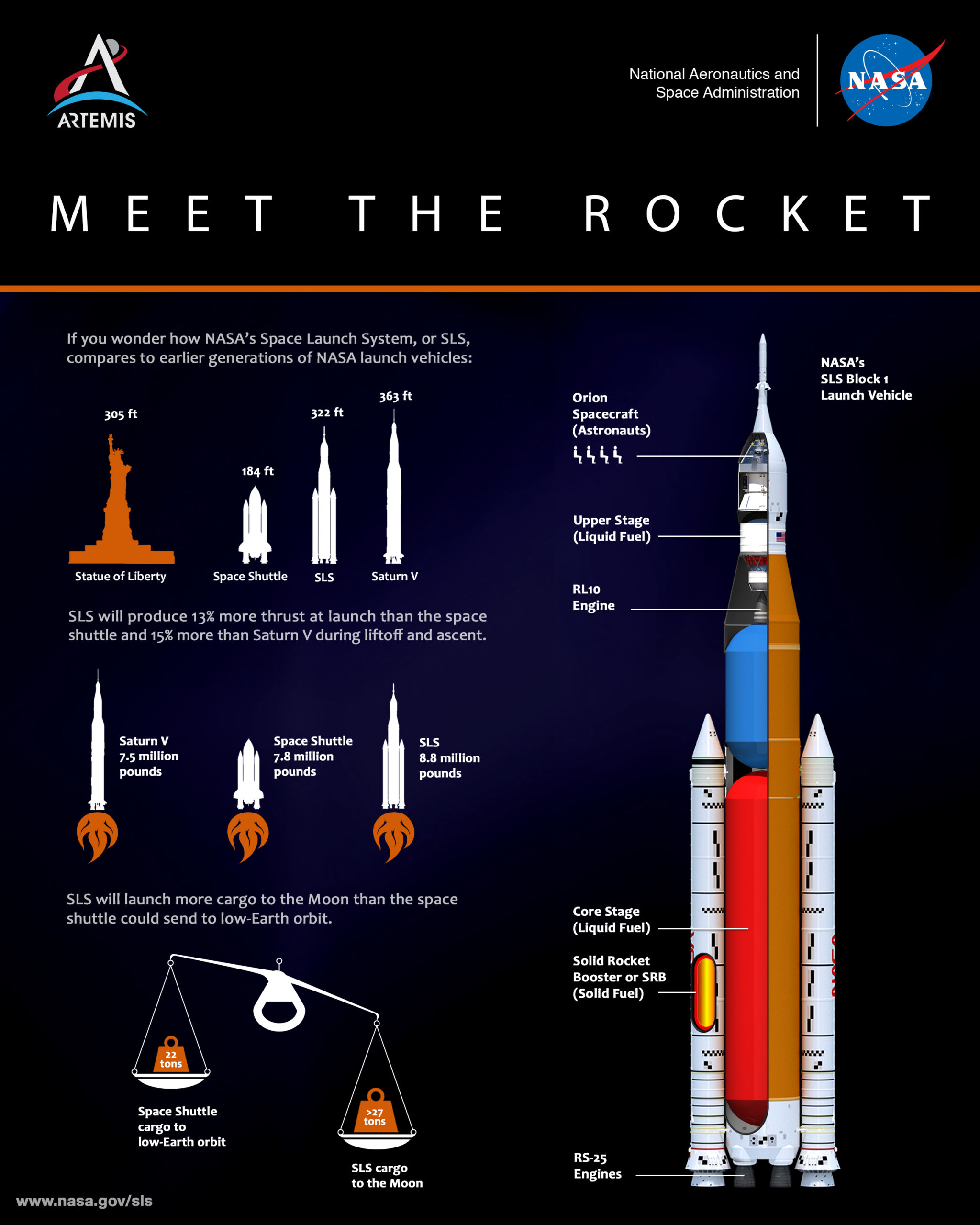
Getting to the Moon requires a powerful rocket ship to launch and accelerate a spacecraft fast enough to overcome the pull of Earth’s gravity and set it on a precise trajectory to its destination. NASA’s deep space rocket, the Space Launch System, will roll out on the Mobile Launcher and take off from the launch pad at NASA’s Kennedy Space Center on its first flight, Artemis I. It will produce a maximum 8.8 million pounds of thrust, exerting more power than any rocket ever. This power will help send the Orion spacecraft out beyond the Moon farther than any spacecraft built for humans has ever traveled before.
Orion Crew Survival System (OCSS) Suit
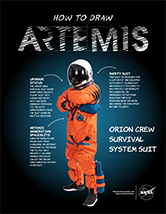
The Orion Crew Survival System (OCSS aka “ox”) Suit is the launch, entry, and survival suit worn by the crew of the Orion capsule on Artemis Missions. The suit connects to the vehicle to enable crew safety by providing them with their own personal environment of gas flow and water cooling. In an emergency, the suit and vehicle act autonomously to maintain a personal protective atmosphere around the crew. This allows them to safely continue contingency operations for up to six days in the event of a deep space emergency.
Exploration Extravehicular Mobility Unit (xEMU)
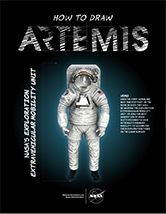
Walking on the surface of the Moon requires the astronauts to wear a specially designed space suit, the Exploration Extravehicular Mobility Unit (xEMU), to protect against the harsh lunar environment and enable exploration. The new xEMU spacesuit is designed to be worn on the Moon, or another planetary surface. It will provide enhanced mobility for walking and kneeling. The spacesuit connects to the landers for recharging between moonwalks and can be resized to fit each astronaut.
Lunar Terrain Vehicle
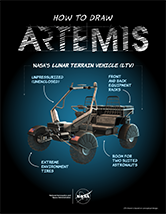
Expanding the exploration footprints of the first woman and the next man on the Moon is an important part of the Artemis mission. NASA’s Lunar Terrain Vehicle (LTV) will allow astronauts to explore larger areas of the lunar surface than by foot alone, carry more equipment, collect more samples, and do more science. Autonomous driving, advanced energy storage, and the ability to survive the Moon’s harsh environment are all top priorities for the LTV.
Vehicle Assembly Building (VAB)
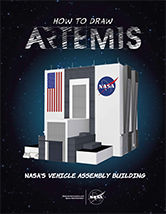
The iconic Vehicle Assembly Building, better known as the VAB, is where NASA will stack the Space Launch System rocket and Orion spacecraft for Artemis missions to the Moon and beyond. One of the largest buildings in the world by volume, the VAB was built for the Apollo missions and served as the final assembly point for all of the Space Shuttle missions. Seen from miles away due to its height and location, the VAB serves as the central hub of Kennedy Space Center.
Crawler Transporter 2
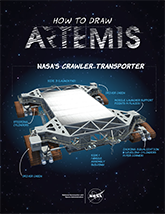
Traveling at less than one mile an hour on average, the crawler transporter lives up to its name. NASA has a pair of behemoth machines that carry the load when a launch platform and stacked launch vehicle go out to the launch pad. Crawler Transporter 2 will take the mobile launcher, Space Launch System and Orion spacecraft to Launch Pad 39B for Artemis I as well as future Artemis missions when the first woman and the next man go to the Moon.
Mobile Launcher Platform (MLP)
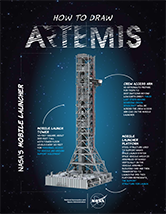
Even though it weighs in at 10.5 million pounds, the 370-foot tall mobile launcher is just that, mobile! The moveable platform structure will hold the Space Launch System rocket and Orion spacecraft as the crawler transporter 2 takes the entire stack from the Vehicle Assembly Building out to Launch Pad 39B for Artemis I and other missions to the Moon. The mobile launcher consists of a two-story base and a tower equipped with a number of connection lines, called umbilicals, and launch accessories that will provide SLS and Orion with power, communications, coolant, fuel, and stabilization prior to launch.
Launch Pad 39B
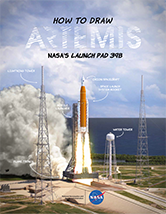
NASA’s Launch Pad 39B at Kennedy Space Center has a historic past, supporting missions from the Apollo and Space Shuttle Programs. Now it’s ready to support NASA’s first Artemis mission to the Moon. Once NASA’s Space Launch System rocket and Orion spacecraft are stacked and assembled inside the Vehicle Assembly Building, they’ll make the 4.2-mile trek on the mobile launcher and crawler to Pad 39B for liftoff. This is the final stop for SLS and Orion before their journey to the Moon, Mars, and beyond.
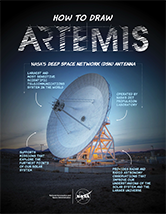
Deep Space Network (DSN)
When it comes to making a long-distance call, it’s hard to top NASA’s Deep Space Network. It’s the largest and most sensitive scientific telecommunications system in the world. The Deep Space Network – or DSN – is NASA’s international array of giant antennas that supports interplanetary spacecraft missions, plus a few that orbit Earth. The DSN also provides radar and radio astronomy observations that improve our understanding of the solar system and the larger universe. The DSN consists of three facilities at Goldstone, near Barstow, California; near Madrid, Spain; and near Canberra, Australia. The strategic placement of these sites permits constant communication with spacecraft as our planet rotates – before a distant spacecraft sinks below the horizon at one DSN site, another site can pick up the signal and carry on communicating. The antennas of the Deep Space Network are the indispensable link to explorers venturing beyond Earth. They provide the crucial connection for commanding our spacecraft and receiving their never before seen images and scientific information propelling our understanding of the universe, our solar system and ultimately, our place within it.
Click on any of the “How To Draw Artemis” images to open and download the respective drawing guide as a PDF file.
Artemis Children’s Books
Hooray! NASA is working to send humans back to the Moon to live, learn, and explore through the Artemis missions. We are in a Golden Age of innovation and exploration, and NASA invites you to join the explorers and be part of the story.
“Hooray for SLS!”, “Our Friend Orion,” and “There and Back with EGS,” written by Lane Polak and illustrated by Heather Rose Legge-Click, introduce young explorers ages 3 to 8 to some of the unique elements needed for NASA Artemis missions to get to deep space and the Moon. With the help of NASA’s Exploration Ground System team, NASA’s mighty SLS (Space Launch System) rocket is designed to launch NASA’s Orion spacecraft, astronauts, and heavy payloads deeper in space than we ever have before.
We are going and that calls for a celebration: Hooray for SLS!
Our Friend Orion
NASA is working to send humans back to the Moon to live, learn, and explore through the Artemis campaign. As a member of the Artemis Generation, NASA invites you to be a part of the story.
“Our Friend Orion,” (click link to download PDF) written by Lane Polak and illustrated by Heather Rose Legge-Click, is the second in a series of children’s books that introduces young explorers ages 3 to 8 to some of the unique elements needed for the Artemis missions to get to deep space and the Moon, like NASA’s Orion spacecraft and SLS (Space Launch System) rocket.
Working together, the mighty SLS rocket and dependable Orion spacecraft will carry a crew of astronauts to deep space destinations. Once in space, Orion is designed to sustain the crew inside during space travel and provide safe re-entry for their return home.
Sometimes you need a friend to support you on your greatest missions. Through the incredible bond that Orion and SLS share, anything is possible.
Hooray for SLS!
Hooray! NASA is working to send humans back to the Moon to live, learn, and explore through the Artemis campaign. As a member of the Artemis Generation, NASA invites you to be a part of the story.
“Hooray for SLS!,” (click link to download PDF) written by Lane Polak and illustrated by Heather Rose Legge-Click, is the first in a series of children’s books that introduces young explorers ages 3 to 8 to some of the unique elements needed for the Artemis missions to get to deep space and the Moon, like NASA’s SLS (Space Launch System) rocket. The SLS mega rocket is special. It is designed to launch astronauts and heavy payloads from Earth, sailing across a cosmic sea to the Moon and beyond.
We are going! We’re traveling deeper in space than we ever have before, and that calls for a celebration. Hooray for SLS!
Hurra por SLS en Espanol
Hourra pour le SLS en Francaise
There and Back with EGS
ASA is working to send humans back to the Moon to live, learn, and explore through the Artemis campaign. As a member of the Artemis Generation, NASA invites you to be a part of the story.
“There and Back with EGS,” (click link to download PDF) written by Lane Polak and illustrated by Heather Rose Legge-Click, is the third in a series of children’s books that introduces young explorers ages 3 to 8 to some of the unique elements and programs needed for the Artemis missions to get to deep space and the Moon, such as NASA’s Exploration Ground Systems or EGS for short.
When the mighty SLS (Space Launch System) rocket and dependable Orion spacecraft are ready for their big mission, they travel to NASA’s Kennedy Space Center in Florida, where EGS takes over. The EGS team are the ones that get the rocket and spacecraft ready for launch, sends them to the Moon, and helps bring them home again! So hop aboard and take a tour, as we introduce you to the incredible program that takes us there and back!
Hooray for SLS! activities booklet
Play, learn, and blast off with the SLS rocket through this downloadable activities booklet based off Hooray for SLS!
SLS posters, lithograph, postcard and bookmarks
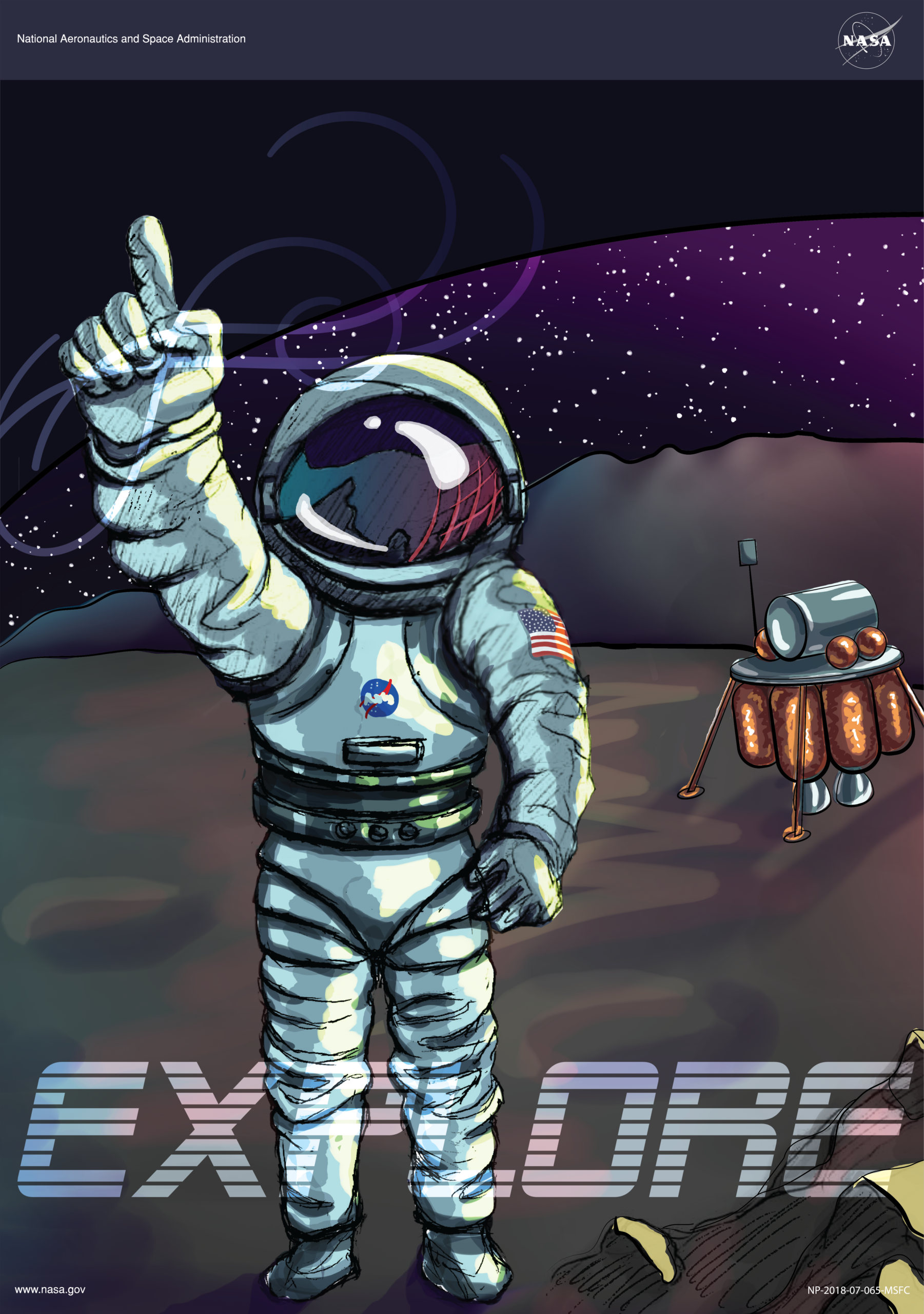
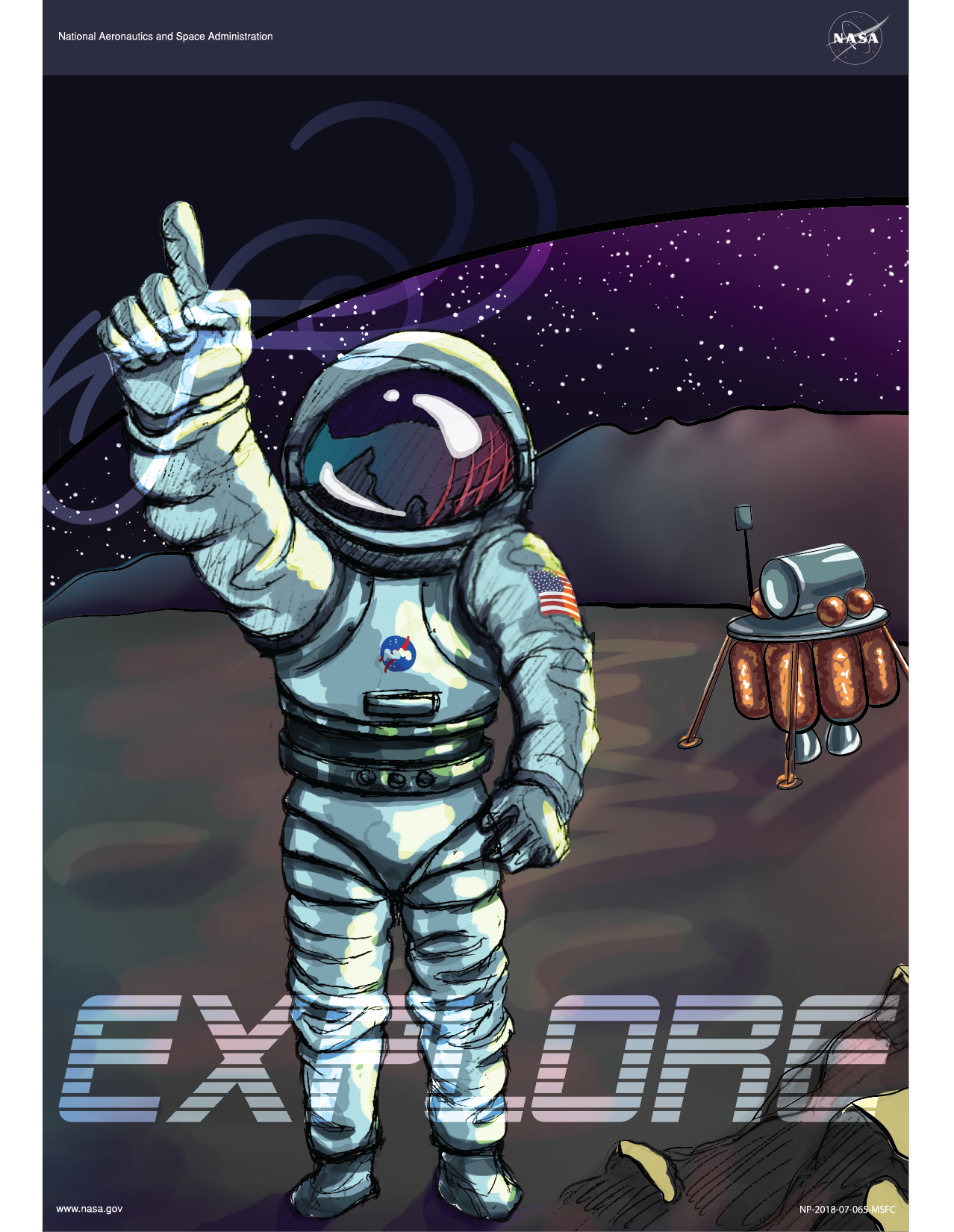
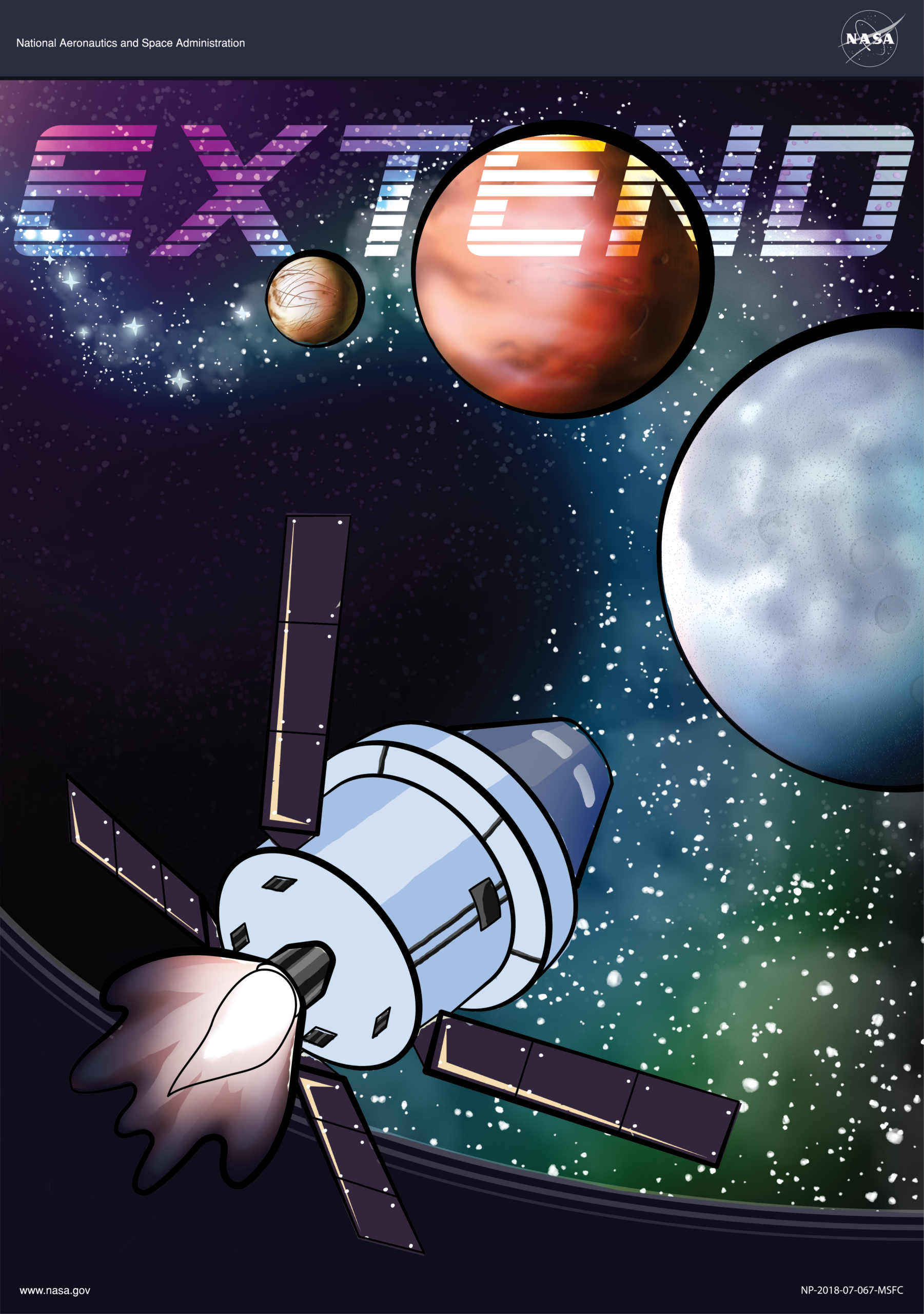
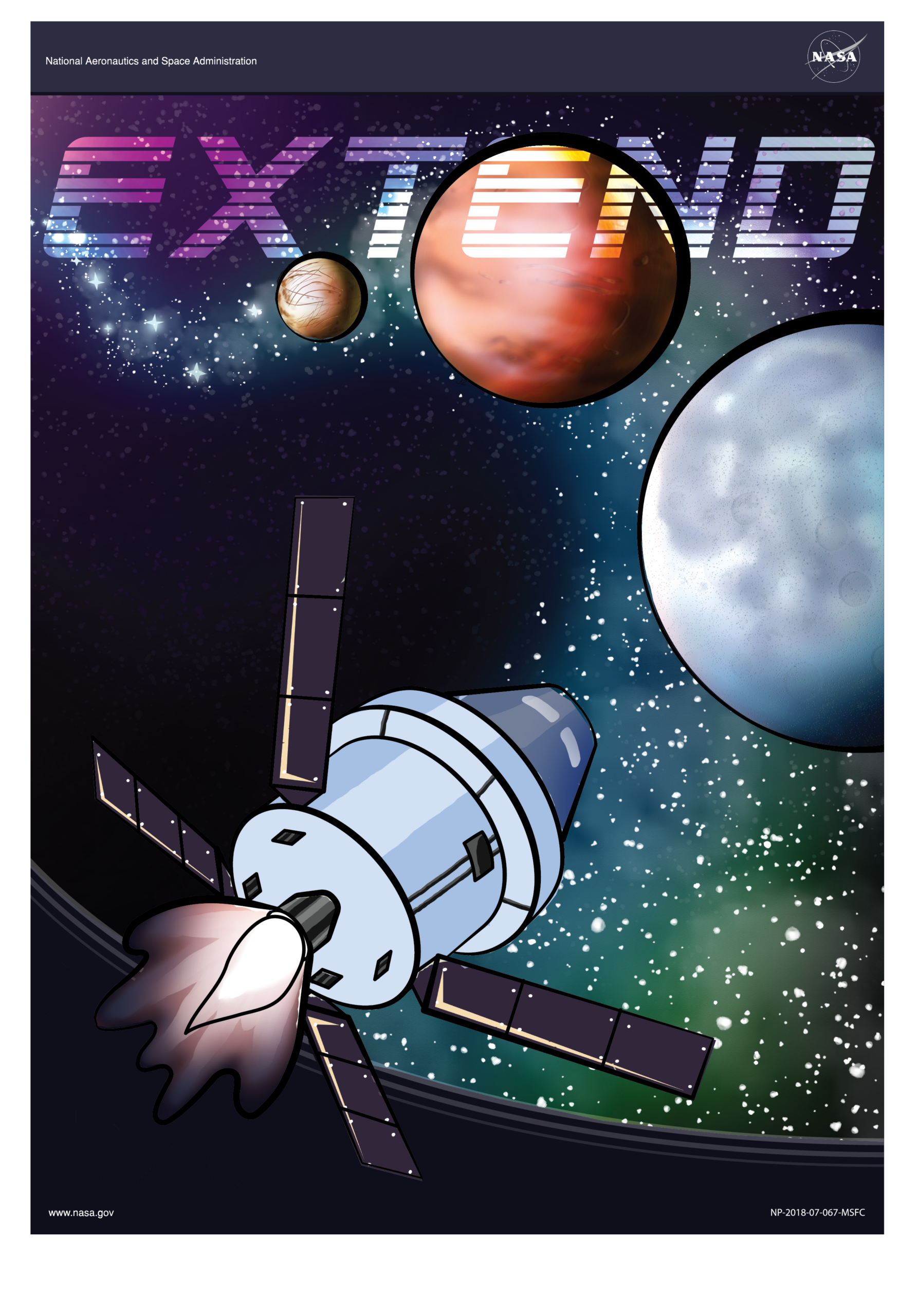
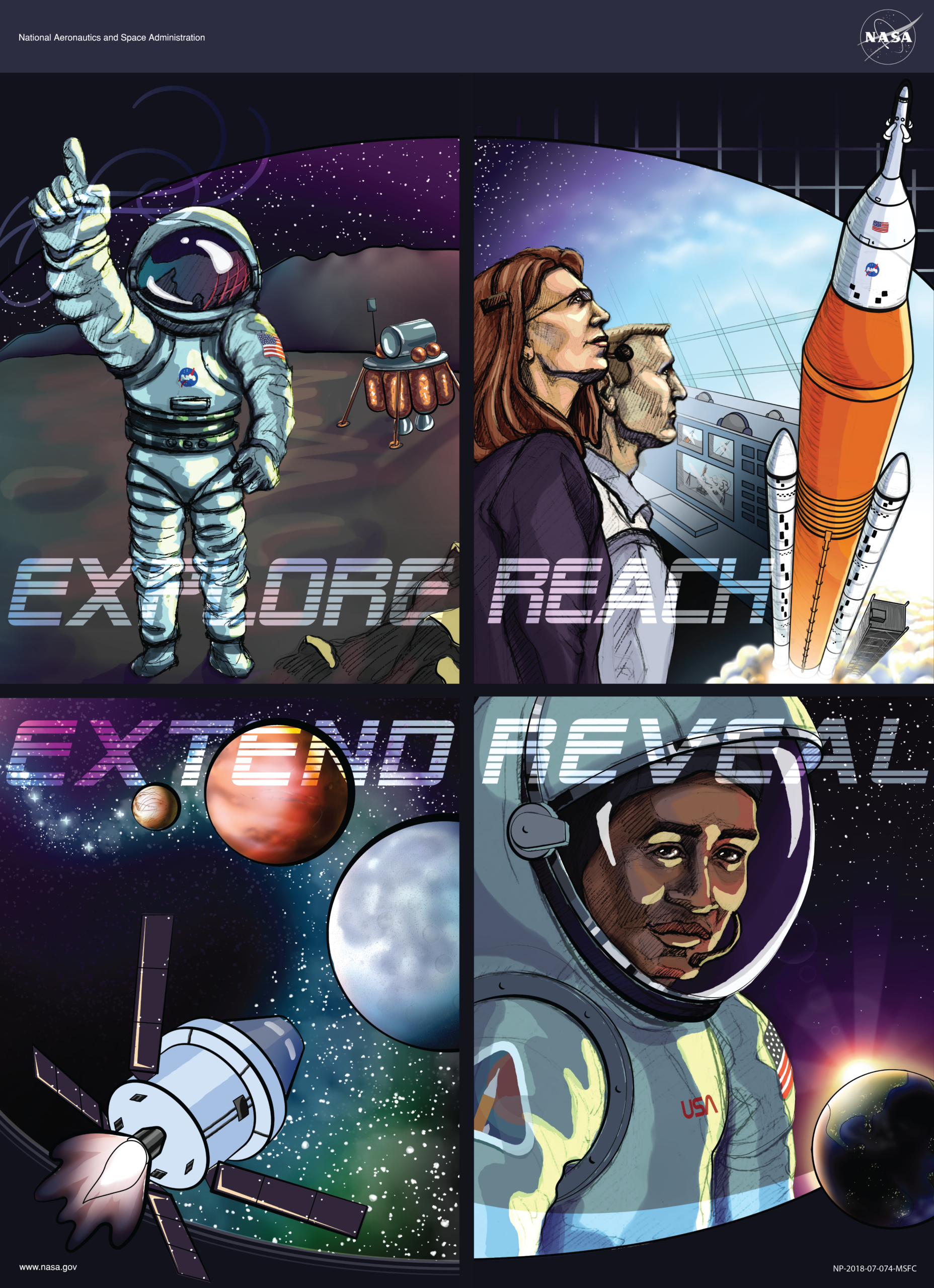
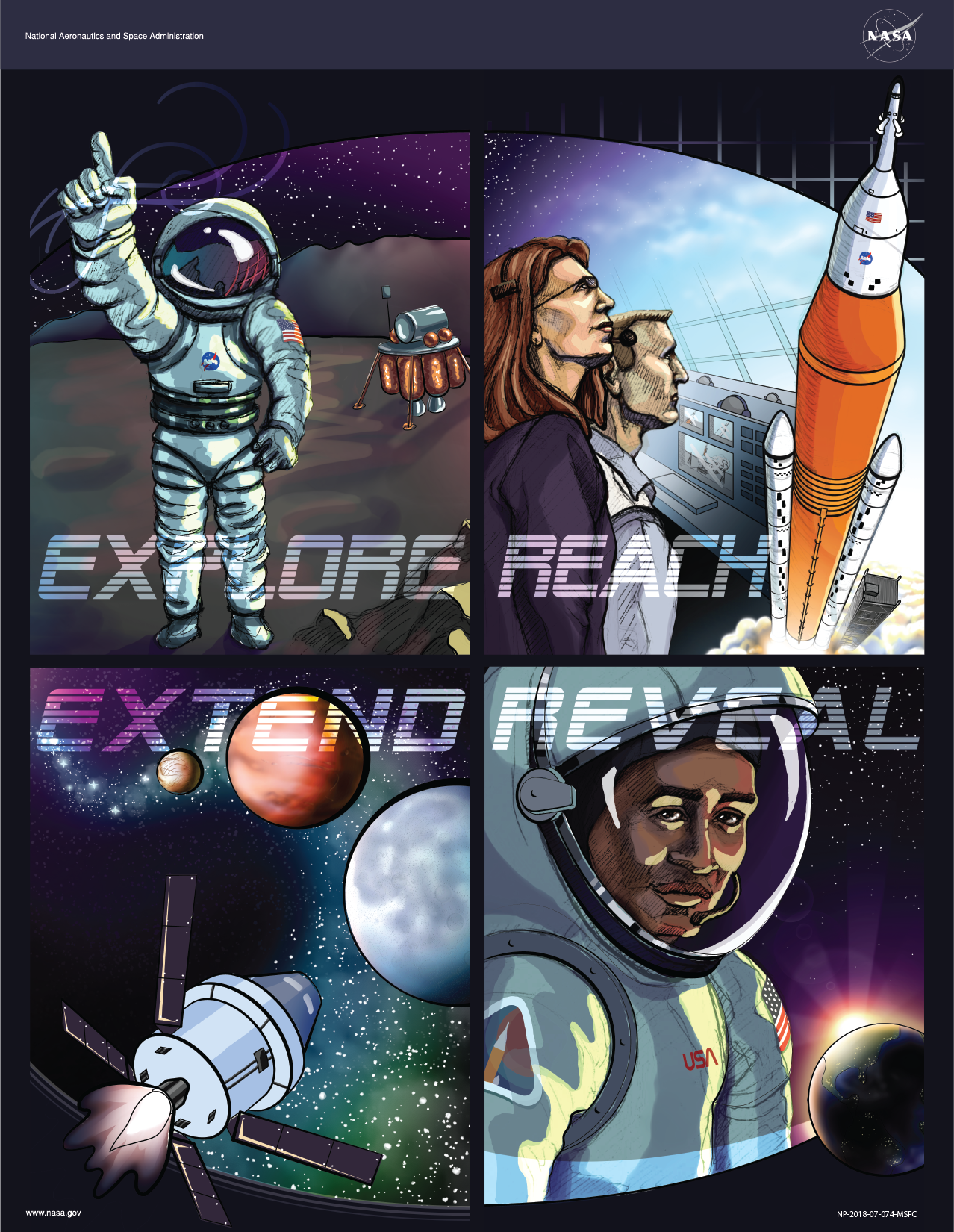
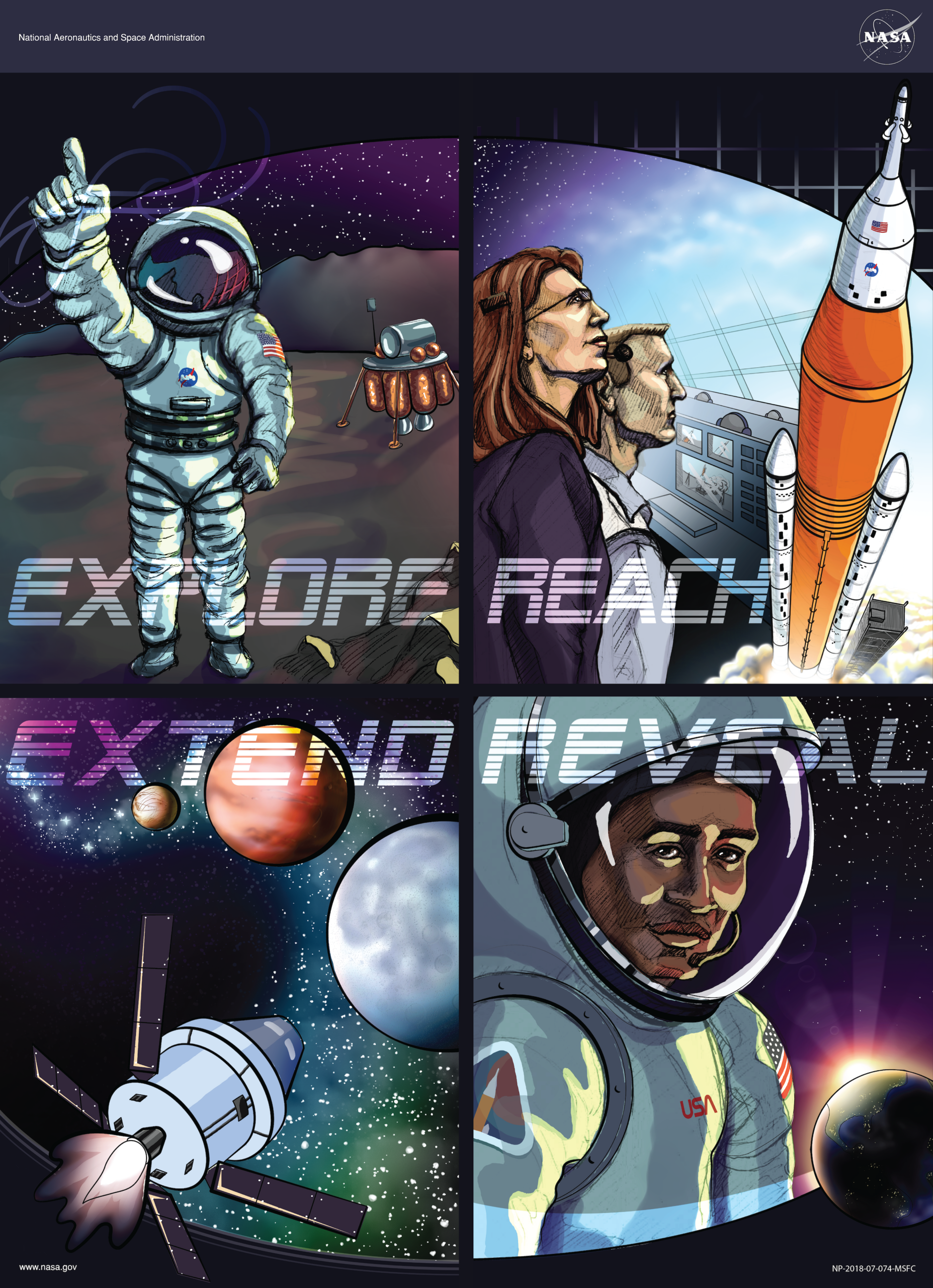
The Exploration Systems Development posters highlight many of the exciting ways NASA will explore deep space in the near future. A limited addition poster format was originally distributed at Comic-Con 2018 and has since been modified and made available for public and educational use.
ESD Explore Poster
14 x 20 | 8.5 x 11
ESD Extend Poster
14 x 20 | 8.5 x 11
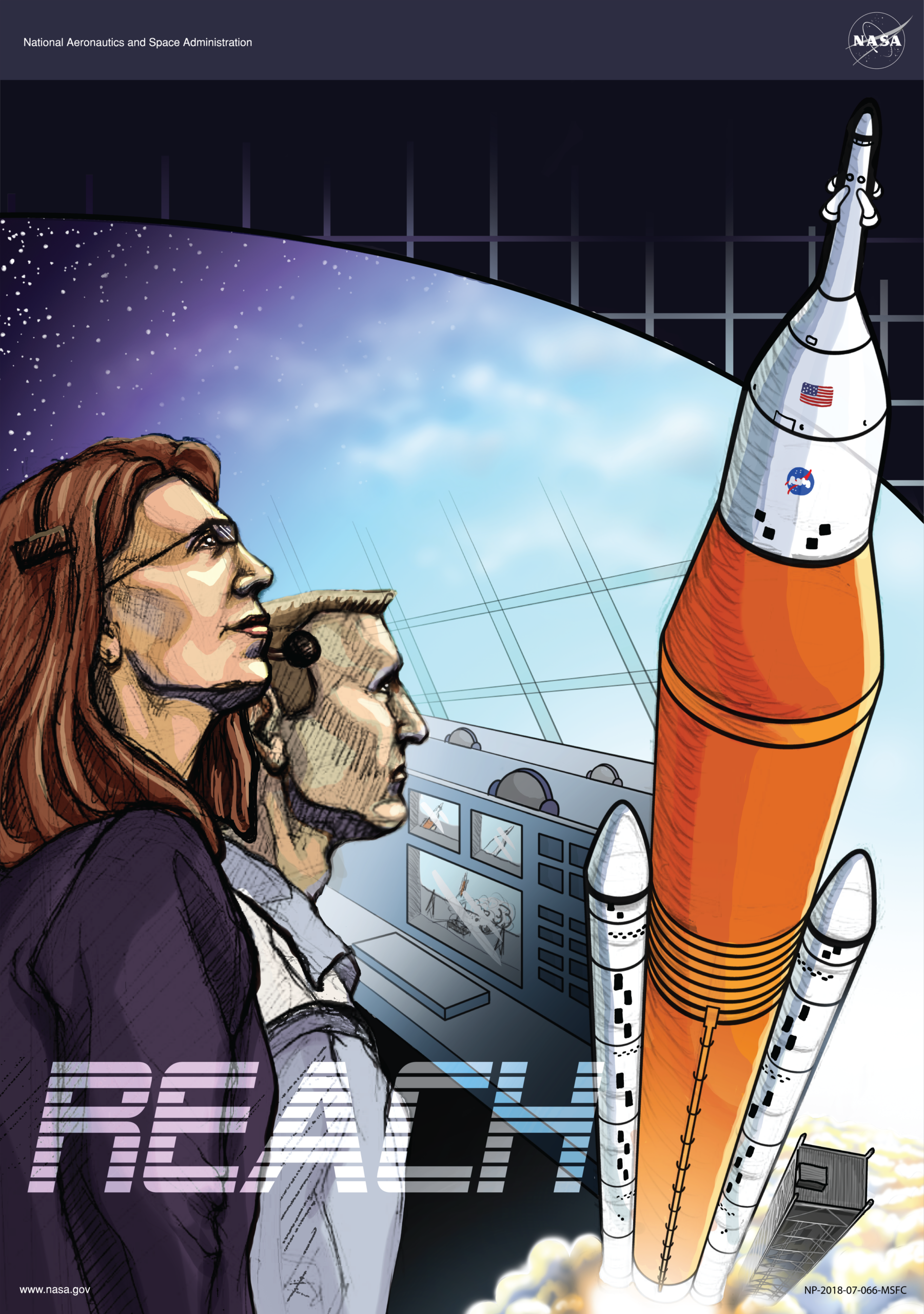
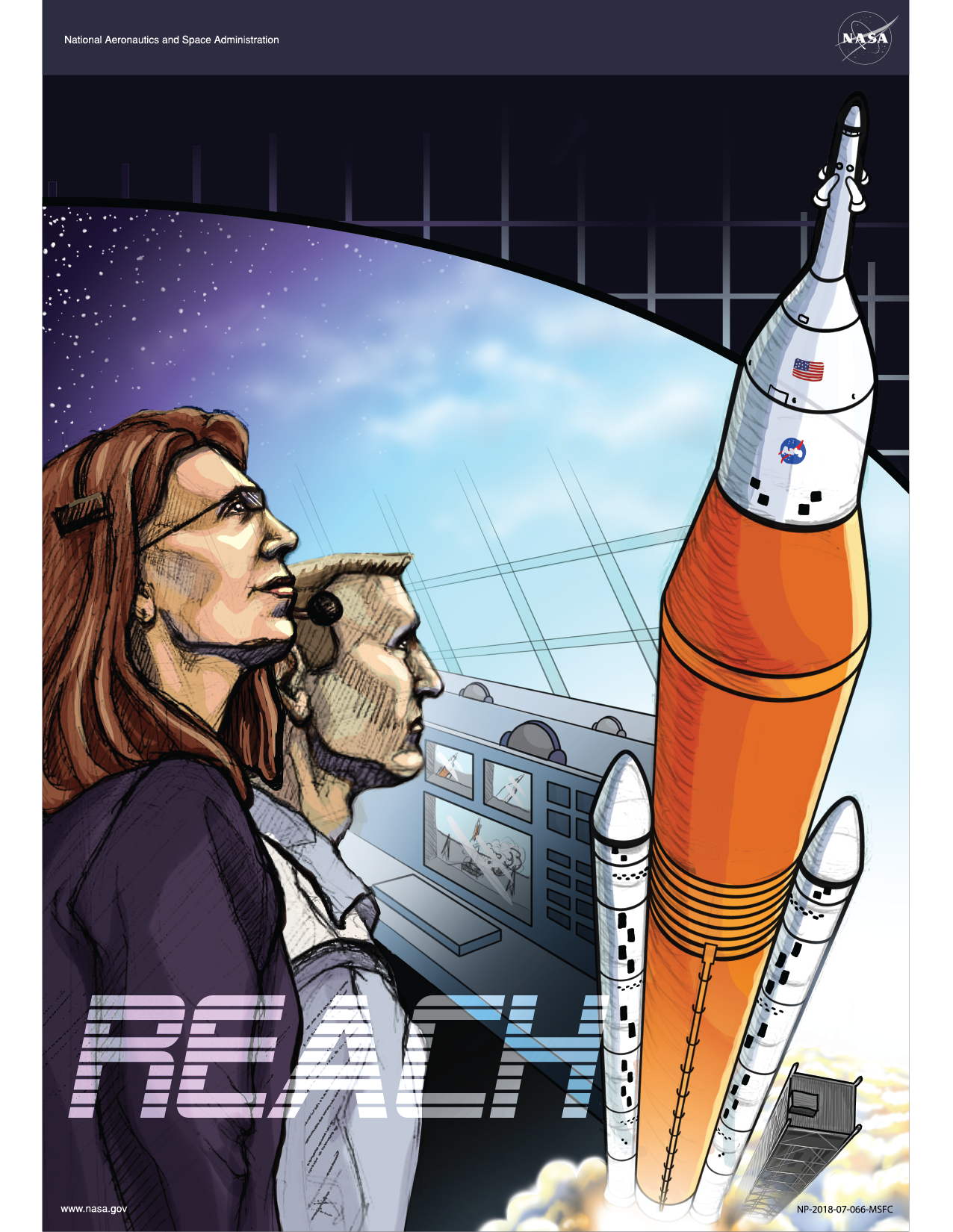
ESD Reach Poster
14 x 20 | 8.5 x 11
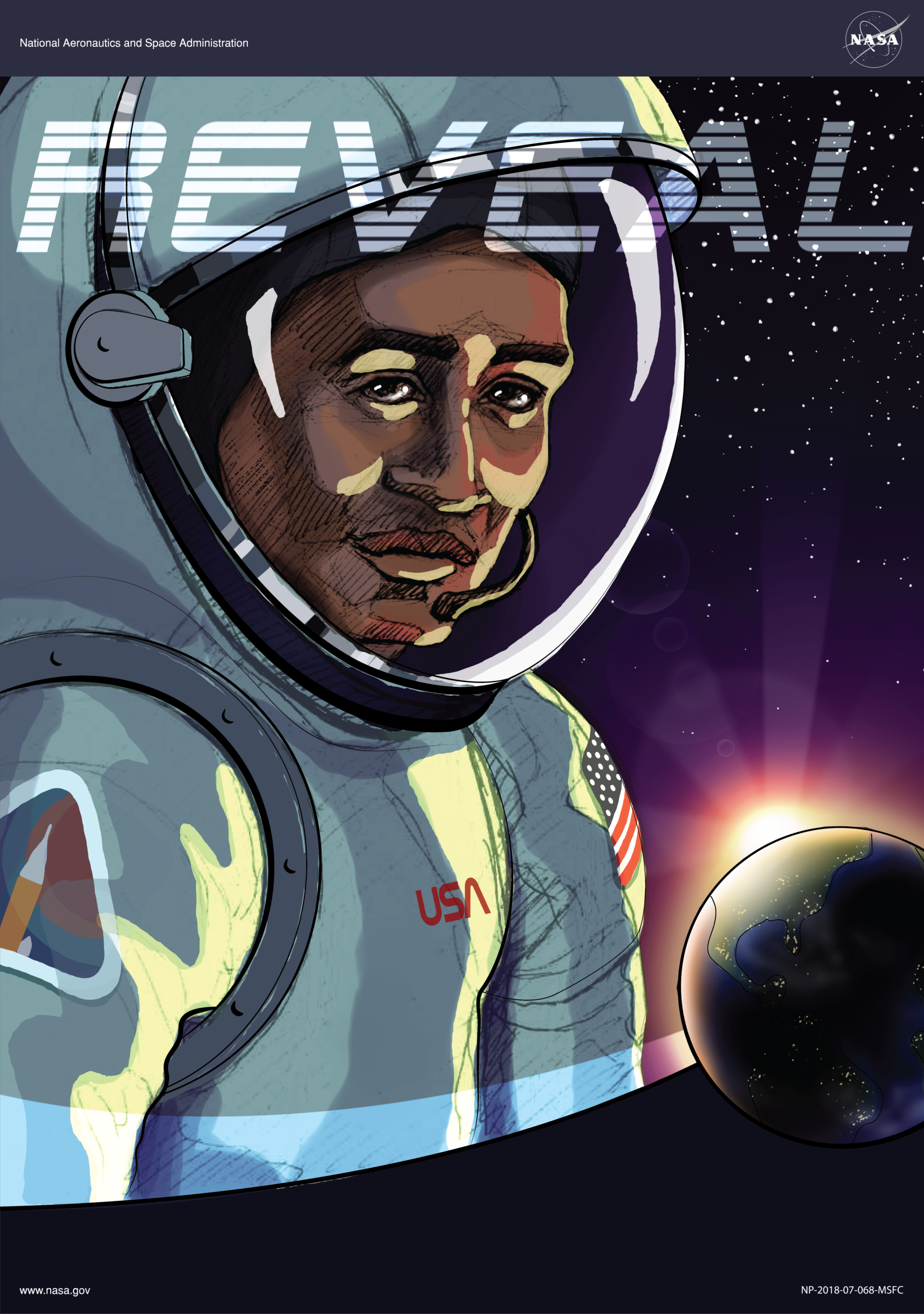
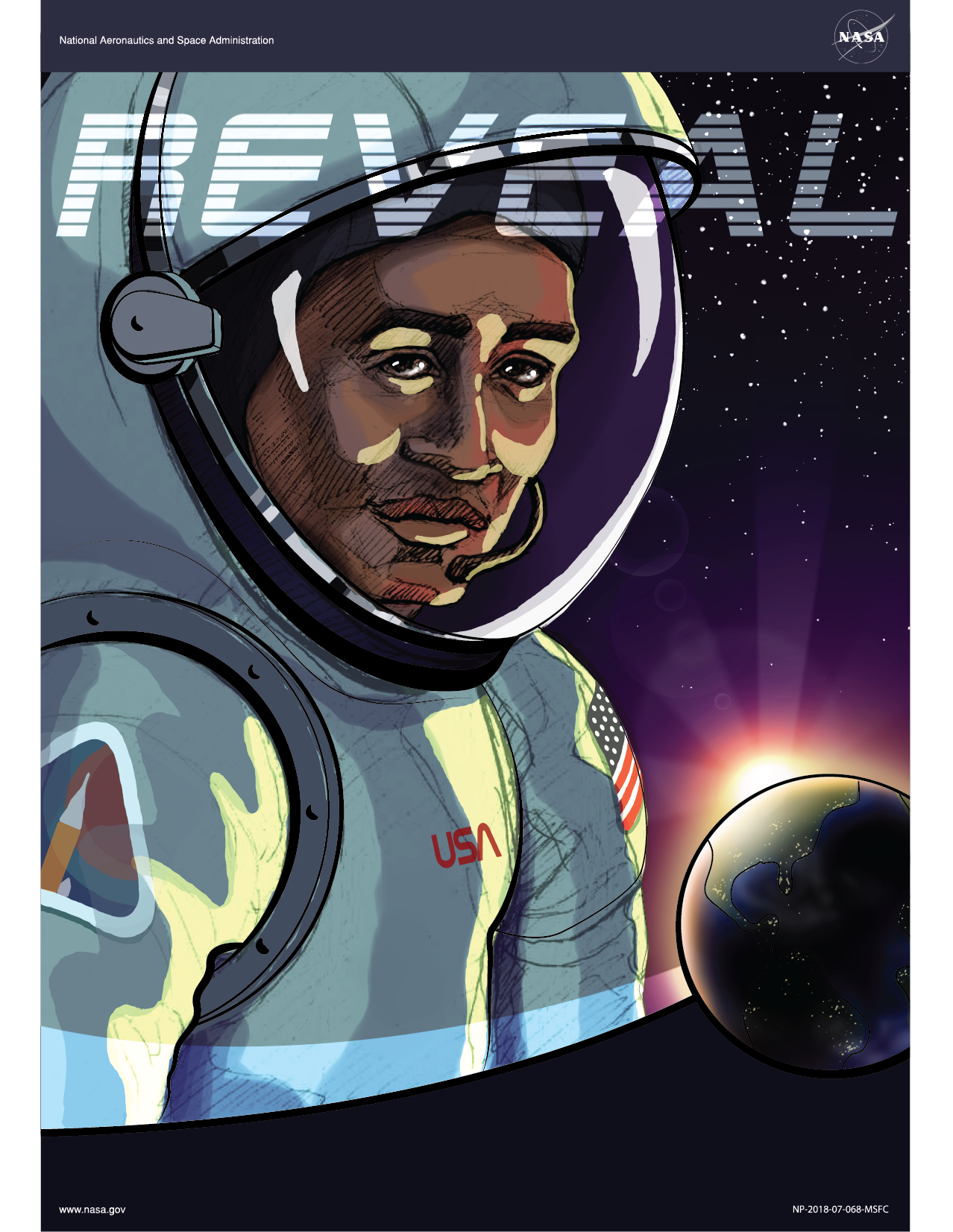
ESD Reveal Poster
14 x 20 | 8.5 x 11
ESD Poster Set – 4 Up
14 x 20 | 8.5 x 11
Space Launch System Lithograph
Hooray for SLS! postcard
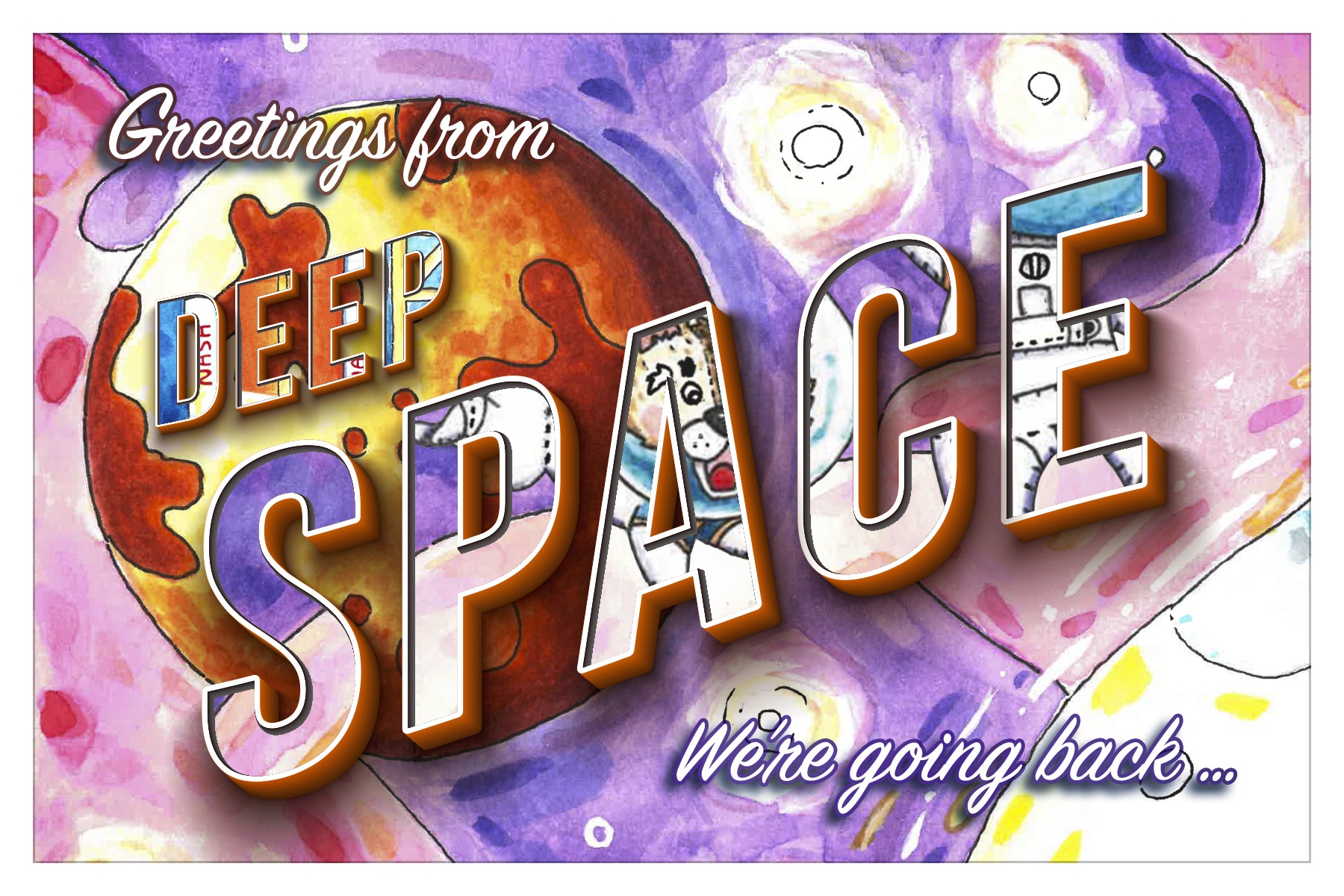
Click on the image to download both sides of the postcard as a single PDF file.
Space Launch System bookmarks
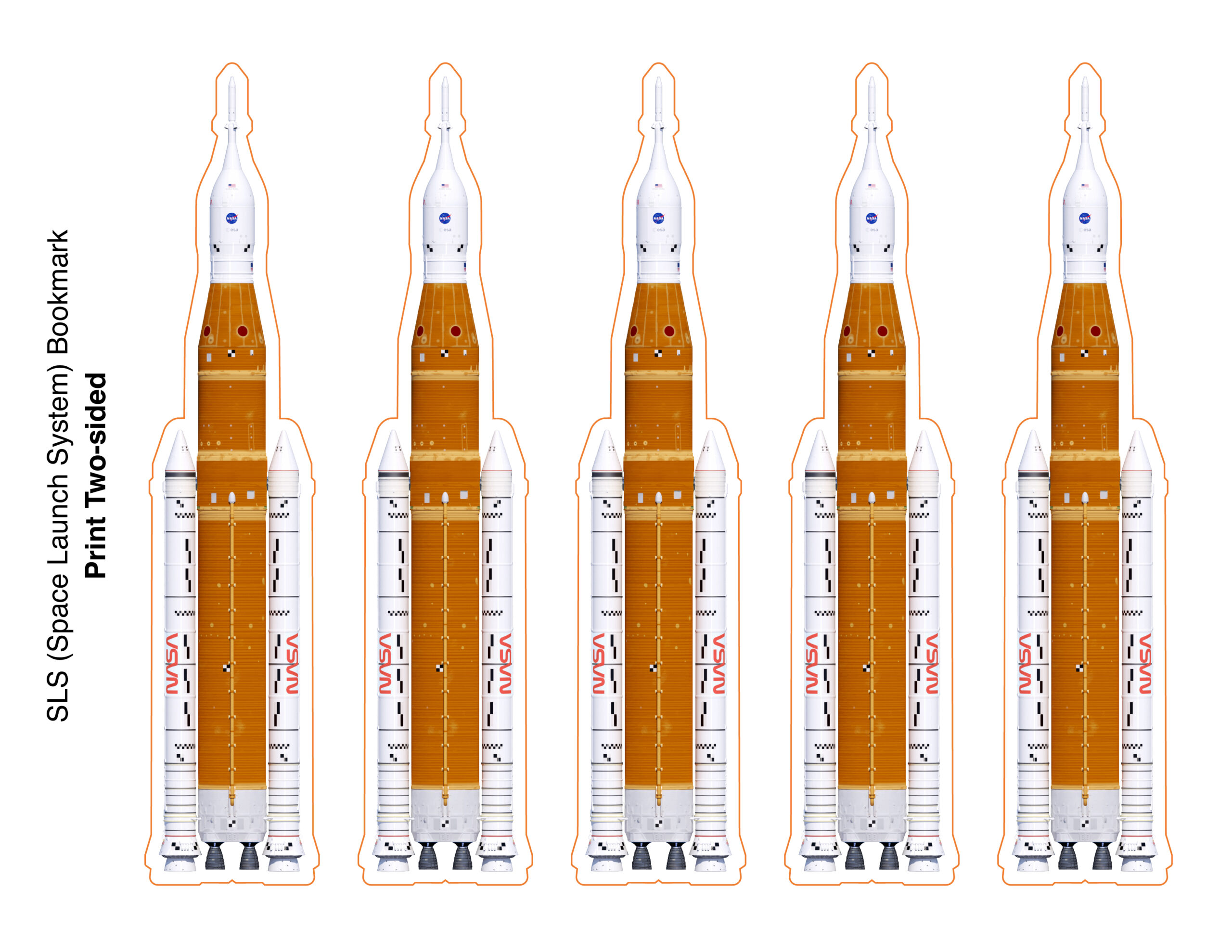 Click on the image to download the SLS bookmarks as a single jpeg file.
NASA educational videos
NASA has published a variety of YouTube video playlists about Artemis and rocket science. We’re providing links to a few of those here.
Watch the entire Rocket Science in 60 Seconds playlist.
Watch the entire STEMonstations playlist.
Watch the entire Nerdy Words playlist.
Watch the entire No Small Steps playlist.
Learn with NASA videos:
Exploring the Moon: Lunar Rovers
For even more Artemis related activities, see our earlier post – Stay busy with NASA’s Artemis Coloring and Activity Pages – which was published in advance of the Artemis I launch in August 2022.